

BLOG

Occupational Fraud Still Affects Many Businesses
The more things change, the more they stay the same. This age-old saying applies to many things, and one of them is fraud perpetrated against businesses by their employees.
In fact, occupational fraud cost organizations about 5% of their revenue on average last year, according to the Association of Certified Fraud Examiners’ Occupational Fraud 2024: A Report to the Nations. Let’s review its three basic categories.
Misappropriating assets
The first category is asset misappropriation. It comprises theft or misuse of any business asset, but related schemes often involve cash. These types of scams are the most common type of occupational fraud, though they’re typically less costly than crimes committed under the other two categories.
One classic example is the “ghost” employee ploy, where a staff member with payroll access channels funds to a nonexistent worker. Naturally, those funds end up in the real employee’s pocket.
There are plenty of others. Asset misappropriation has long involved check tampering, whereby an employee steals, forges or alters company checks to reap ill-gotten financial rewards. Now that midsize and larger businesses rely more on electronic transactions, these companies are relatively less susceptible to check schemes. However, many small companies are still at risk.
If you run a cash-intensive business, be on the lookout for dishonest workers skimming funds before they’re recorded. And if your company maintains inventory or supplies, safeguard these carefully to avoid theft.
Engaging in corrupt activities
The second category of occupational fraud is corruption. Dishonest employees in positions of influence may commit crimes for personal gain and the company’s loss. These types of schemes are rarely simple and may go on for months — or even years — without anyone noticing.
For instance, a corrupt staffer may work with a vendor rep to inflate prices on the vendor’s goods and services. The two then split the difference when the business pays the bill. Collusion like this can hurt your company’s financial performance and business reputation. Leadership teams that fail to prevent such schemes risk losing the confidence and support of lenders and investors.
Don’t ignore the possibility of kickback schemes either. Here, a person of influence in the company uses a vendor or other provider, not because they’re the best choice, but because the employee involved gets a personal benefit. Examples might include cash, a valuable gift or free services.
Falsifying financial statements
The third category is financial statement fraud. In these schemes, perpetrators falsify financial statements to either hide poor performance or commit outright theft. On the upside, this category is generally the least prevalent of the three. The downside? It’s often the costliest — with such crimes costing companies many hundreds of thousands of dollars on average.
One example to watch out for is inflated revenue. A manager, perhaps angling for a promotion or fearful of termination, records sales that never actually occurred to make the business appear more profitable. On a similar tack, a dishonest employee may hide or delay recording legitimate expenses or debts to make financial results look stronger.
Fraudulent manipulation of financial statements can be particularly dangerous. These crimes are often sophisticated, hard to detect and damaging to a company’s reputation at the highest levels.
Common thread
As you can see, occupational fraud can take many forms. But the common thread is the financial and reputational damage to affected businesses. And the threat level is often higher for smaller companies because they may have fewer resources to fight back. Let FMD help you spot vulnerabilities in your operations, strengthen internal controls, and devise tailored fraud prevention and detection strategies.

A Quiet Trust Has its Benefits, but an Incentive Trust may be a Better Option
When it comes to estate planning, one of the more nuanced tools available is a quiet trust (also known as a “silent” trust). Unlike a traditional trust, a quiet trust keeps beneficiaries — often children or young adults — in the dark about its existence or details until they reach a certain age or milestone.
Many states permit quiet trusts, but these trusts have both positives and negatives. Depending on the situation, an incentive trust may be a better way to achieve your goals.
The pros
One of the biggest benefits of using a quiet trust is that it helps preserve ambition and independence. If your heirs know too early about a significant inheritance, they may lose motivation to pursue educational goals or build a career. By keeping the details private, you give them the chance to grow independently.
Quiet trusts can also reduce family conflict during your lifetime, especially if distributions are unequal or come with specific conditions. In addition, secrecy offers protection from outside pressures — such as creditors, estranged spouses or opportunistic friends — and allows time for heirs to develop the maturity needed to manage wealth responsibly.
The cons
Quiet trusts aren’t without drawbacks. Some beneficiaries may feel resentful when they eventually discover that assets were withheld from them. This secrecy can also increase the risk of legal challenges once the trust is revealed.
By keeping heirs uninformed, you also may unintentionally deprive them of valuable opportunities. For example, they might forego graduate school because they don’t want to take on student loan debt that could take decades to pay back when, in fact, the trust would eventually allow them to pay off the loan more quickly. (Or current access to the money could allow them to avoid student loan debt altogether.) And because trustees must administer the trust without beneficiary input, their decisions could later be questioned, adding tension at an already difficult time.
Another option
The idea behind a quiet trust is to avoid disincentives to responsible behavior. But it’s not clear that such a trust will actually accomplish that goal. A different approach is to design a trust that provides incentives for responsible behavior.
For example, an incentive trust might condition distributions on behavior you wish to encourage, such as obtaining a college or graduate degree, maintaining gainful employment, or pursuing worthy volunteer activities. Or it could require getting treatment for alcohol or substance abuse and maintaining a sober lifestyle.
One drawback to setting specific goals is that it may penalize a beneficiary who chooses a different, but responsible, life choice — a stay-at-home parent, for example. To build some flexibility into the trust, you might establish general principles for distributing trust funds to beneficiaries who behave responsibly but give the trustee broad discretion to apply these principles on a case-by-case basis.
Finding the right balance
A quiet trust can be a powerful way to encourage independence and protect your heirs, but it requires careful planning. Many families find success in combining secrecy with a gradual disclosure strategy — sharing information at key milestones or leaving behind a written explanation to reduce confusion and conflict.
Every family is different, and the decision to use a quiet trust or an incentive trust should be based on your goals, values and relationships. FMD can help you weigh the pros and cons and structure your plan in a way that best protects your family and your legacy.

Businesses Strive for Balance in Hybrid Work Models
If your business allows employees to perform their jobs under a hybrid work model, it’s not alone. Ever since the pandemic, many companies have sought to strike a balance between permitting some remote work while also requiring staff to come into the office (or another type of facility).
Data released this year shows that, by and large, businesses seem to have found a certain equilibrium regarding hybrid work. However, maintaining the right balance for your company will require a careful eye going forward.
Schedule control
Just this month, Gallup published survey results showing that, as of May 2025, 51% of remote-capable employees in the United States are working under a hybrid model. That’s a slight decrease from 55% in November 2024. Interestingly, during the same period, the percentage of fully remote workers rose 2% — but fully on-site employees also increased by the same percentage.
One particularly important issue brought up by the research is how much control a business asserts over its hybrid workers’ schedules. The data showed that the percentage of employees who describe their schedules as “entirely up to me” fell from 37% in 2024 to 34% this year.
How do most companies establish hybrid schedules? Gallup found that three main groups typically make the call:
Employees themselves,
Managers or teams, or
Leadership.
The second option generally comes out on top, according to Gallup. More specifically, 91% of hybrid workers whose teams established their schedules described their employers’ policies as “fair.” That’s the same rate as employees who determined their own schedules. When leadership mandated schedules, the fairness rate reported by hybrid workers fell to only 73%.
Policy enforcement
Another recent report on hybrid work models is the 2025 Americas Office Occupier Sentiment Survey by commercial real estate services and investment consultancy CBRE. It polled companies across the United States, Canada and Latin America on topics that included “efforts to align workspaces with hybrid work models while meeting business objectives.”
Among the survey’s key findings is an uptick in the enforcement of hybrid work policies. In fact, 85% of responding businesses reported communicating an attendance policy to hybrid workers. What’s more:
69% of respondents measured compliance with their policies (up from 45% in 2024), and
37% of respondents took enforcement actions (up from 17% in 2024).
And those enforcement measures seem to be working. The survey found that 72% of respondents achieved their attendance goals in 2025 (up from 61% in 2024). Overall, the data indicates that employees averaged 2.9 days a week on-site, which is close to businesses’ reported expectations of 3.2 days on average.
Cost considerations
Along with determining and refining how you establish workers’ schedules and enforce your policies, you should carefully identify all the costs that accompany hybrid work. For example, even with fewer employees on-site, your business still needs to maintain office space.
Some companies are downsizing, while others are redesigning their layouts to accommodate shared desks and collaborative spaces. If you choose these alternatives, be aware of your lease commitments, maintenance and utility expenses, and renovation costs.
Supporting a hybrid workforce also requires secure and reliable technology. This typically includes video conferencing tools, cloud-based software, cybersecurity measures, and internet and networking systems. These expenses often extend to both office and home setups.
Beware of hidden costs, too. For instance, policy enforcement may cause your business to spend more on compliance-related technology, as well as training for HR staff and supervisors.
Clear and constant view
The surveys mentioned above, as well as other indicators, show that hybrid work is here to stay. Finding the optimal balance for your business depends on savvy scheduling, judicious policy enforcement, and a clear and constant view of the financial implications. FMD can help you assess all the expenses involved and align spending with productivity goals to ensure your hybrid model remains sustainable.

Is a Custodial Account Right for Your Family?
If you’re considering opening an investment account for your minor child or grandchild to help him or her save for the future, a custodial account can be a useful option. Indeed, for many families, a custodial account strikes the right balance between gifting assets to a child and maintaining oversight until the child is legally an adult. It also has some benefits compared to a Trump Account, which the One Big Beautiful Bill Act will make available beginning in 2026.
What is a custodial account?
A custodial account is a financial account that an adult manages on behalf of a minor child until the child reaches the age of majority (typically 18 or 21, depending on the state). These accounts are often set up under the Uniform Gifts to Minors Act (UGMA) or the Uniform Transfers to Minors Act (UTMA), which provide a legal framework for transferring assets to minors without requiring a formal trust.
The adult custodian — often a parent or grandparent — has control over the account, but the assets legally belong to the child. Once the child comes of age, the account is transferred into his or her full control. Trump Accounts will be similar in that, generally, the child won’t be able to access the account funds until reaching age 18.
Custodial accounts can hold a wide range of assets, including cash, stocks, bonds, mutual funds, and, in the case of UTMA accounts, even real estate or other property. Trump Accounts, on the other hand, will generally be limited to investing in exchange-traded funds or mutual funds that track the return of a qualified index and meet certain other requirements.
Custodial account funds can be used for any purpose and often are used to save for future expenses such as a first car or a down payment on a home. Trump Account funds also can be used for any purpose. Both types of accounts can be used to fund education expenses, but they don’t offer some of the tax benefits of education-specific savings options.
What are the pluses and minuses?
One of the most significant advantages of using a custodial account is its flexibility. Indeed, unlike some savings vehicles, such as Coverdell Education Savings Accounts (ESAs), anyone can contribute to a custodial account, regardless of their income level, and there are no contribution limits. (Trump Accounts will have annual contribution limits.)
Also, as noted earlier, there are no restrictions on how the money in custodial accounts or Trump Accounts is spent. In contrast, funds invested in ESAs and Section 529 education savings plans must be spent on qualified education expenses — withdrawals not used for qualified expenses may be partially subject to a 10% penalty. (Trump Account withdrawals could also be partially subject to a 10% penalty if taken before age 59½).
Contributions to custodial accounts can also save income taxes. A child’s unearned income up to $2,700 (for 2025) is usually taxed at low rates. (Income above that threshold is usually taxed at the parents’ marginal rate.)
On the downside, other savings vehicles can offer greater tax benefits. Although custodial accounts can reduce taxes, ESAs, Section 529 plans and Trump Accounts allow earnings to grow on a tax-deferred basis. Also, ESA and 529 plan withdrawals are tax-free provided they’re spent on qualified education expenses. There may also be financial aid implications, as the assets in a custodial account are treated less favorably than certain other assets.
Trump Accounts provide another potential benefit that custodial accounts don’t: U.S. citizens children born between Jan. 1, 2025, and Dec. 31, 2028, can potentially qualify for an initial $1,000 government-funded deposit to a Trump Account.
It’s important to be aware that there’s a loss of control involved with both custodial accounts and Trump Accounts. After the child reaches the age of majority (or age 18 for Trump Accounts), he or she gains full control over the assets and can use them as he or she sees fit. If you wish to retain control longer, you’re better off opening an ESA or a 529 plan or creating a trust.
Consider all your options
Custodial accounts can be a valuable tool to build your child’s financial foundation while teaching him or her about money management. Still, it’s important to weigh the tax implications, college planning considerations and your long-term goals before opening one. Depending on the situation, another type of account may better fit your goals. Contact FMD with questions.
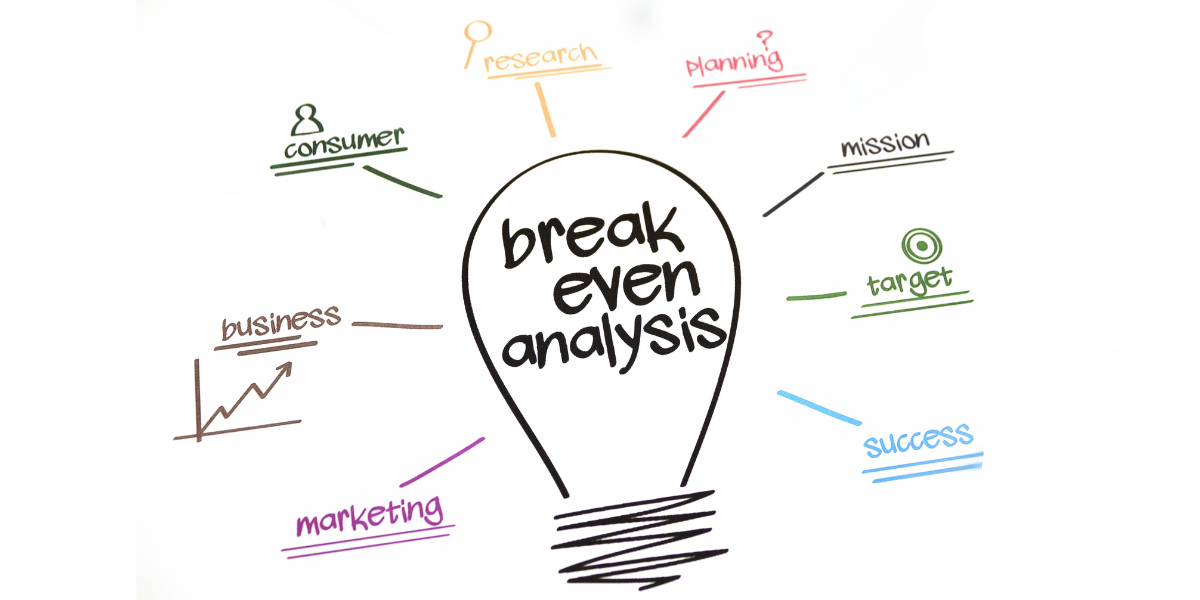
Evaluating Business Decisions using Breakeven Analysis
You shouldn’t rely on gut instinct when making major business decisions, such as launching a new product line, investing in new equipment or changing your pricing structure. Projecting the financial implications of your decision (or among competing alternatives) can help you determine the right course of action — and potentially persuade investors or lenders to finance your plans. One intuitive tool to consider for these applications is breakeven analysis.
What’s the breakeven point?
The breakeven point is simply the sales volume at which revenue equals total costs. Any additional sales above the breakeven point will result in a profit. To calculate your company’s breakeven point, first categorize all costs as either fixed (such as rent and administrative payroll) or variable (such as materials and direct labor).
Next, calculate the contribution margin per unit by subtracting variable costs per unit from the price per unit. Companies that sell multiple products or offer services typically estimate variable costs as a percentage of sales. For example, if a company’s variable costs run about 40% of annual revenue, its average contribution margin would be 60%.
Finally, add up fixed costs and divide by the unit (or percentage) contribution margin. In the previous example, if fixed costs were $600,000, the breakeven sales volume would be $1 million ($600,000 ÷ 60%). For each $1 in sales over $1 million, the hypothetical company would earn 60 cents.
When computing the breakeven point from an accounting standpoint, depreciation is normally included as a fixed expense, but taxes and interest usually are excluded. Fixed costs should also include all normal operating expenses (such as payroll and maintenance). The more items included in fixed costs, the more realistic the estimate will be.
How might you apply this metric?
To illustrate how breakeven analysis works: Suppose Joe owns a successful standalone coffee shop. He’s considering opening a second location in a nearby town. He’s familiar with the local market and the ins and outs of running a successful small retail business. But Joe likes to do his homework, so he collects the following cost data for opening a second location:
$10,000 of monthly fixed costs (including rent, utilities, insurance, advertising and the manager’s salary), and
$1.50 of variable costs per cup (including ingredients, paper products and barista wages).
If the new store plans to sell coffee for $4 per cup, what’s the monthly breakeven point? The estimated contribution margin would be $2.50 per cup ($4 − $1.50). So, the store’s monthly breakeven point would be 4,000 cups ($10,000 ÷ $2.50). Assuming an average of 30 days per month, the store would need to sell approximately 134 cups each day just to cover its operating costs. If Joe’s original store sells an average of 200 cups per day, this gives him a useful benchmark, though market dynamics may differ between locations. If Joe forecasts daily sales for the new store of 180 cups, it leaves a daily safety margin of 46 cups, which equates to roughly $115 in daily profits (46 × $2.50).
Joe can take this analysis further. For example, he knows there’s already another boutique coffee shop near the prospective location, so he’s considering lowering the price per cup to $3.75. Doing so would reduce his contribution margin to $2.25, causing his breakeven point to jump to 4,445 cups per month (about 148 cups per day). Assuming forecasted sales of 180 cups per day, the reduced price would lower the daily safety margin to 32 cups, which equates to about $72 in daily profits (32 × $2.25).
Joe might also consider other strategies to reduce his breakeven point and increase profits. For instance, he could negotiate with the landlord to reduce his monthly rent or find a supplier with less expensive cups and napkins. Joe could plug these changes into his breakeven model to see how sensitive profits are to cost changes.
If Joe opens the new store, he can monitor actual sales against his forecast to see if the store is on track. If not, he might need to consider changes, such as increasing the advertising budget or revising his prices. Then he can enter the revised inputs into his breakeven model. He could also revise his breakeven model based on actual costs incurred after the store opens.
We can help
Breakeven analysis is often more complex than this hypothetical example shows. However, it can be a valuable addition to your financial toolkit. Besides assisting with expansion planning, breakeven analysis can help you evaluate spending habits, set realistic sales goals and prices, and judge whether projected sales will sustain your business during an economic downturn. Contact FMD to learn how to analyze breakeven for your organization and leverage the data to make informed decisions about your business’s long-term financial stability.

5 Ways Your Business Can Build a Stronger Annual Budget
As summer gives way to fall, many businesses begin their budget-setting processes for the upcoming year. This annual rite of passage can be stressful, contentious and, perhaps worst of all, disappointing if your budgets often fail to achieve their objectives.
The good news is that there are many ways to enhance your company’s budgeting process and improve the likelihood that you’ll get good results. Here are five to consider.
1. Optimize data
It’s not uncommon for a business to create its budget by applying an across-the-board percentage increase to the previous year’s actual results. However, this approach may be too simplistic in today’s uncertain economy and ever-changing marketplace.
That’s not to say historical results aren’t a good starting point. But keep in mind that some costs are fixed rather than variable. And certain assets, such as equipment and employees, have capacity limitations. What troubles many companies is the presence of confusing or conflicting information, which eventually hampers their budget’s efficacy.
The solution is data optimization. This is the process of refining how data is collected, stored, managed and applied to maximize efficiency and value. In the context of budgeting, data optimization involves steps such as removing duplicate entries, correcting errors and applying a standard format to strengthen accuracy.
2. Involve the entire organization
Traditionally, many businesses rely only on their accounting departments to devise a budget. However, this approach often “puts blinders” on a company, leaving it at a disadvantage. When creating your budget, seek input from the entire organization.
For example, your sales department may be in the best position to help you accurately estimate future revenue. Meanwhile, your operations or production managers can offer insights into potential staffing adjustments and expenses related to equipment maintenance or replacement.
Soliciting broad participation also gives departments a greater sense of involvement in the budgeting process. In turn, this can help enhance employee engagement and improve your odds of achieving budgeted results.
3. “Sell” it to staff
Good budgets encourage the hard work needed to grow revenue and cut costs. But targets must be attainable. Employees will likely become discouraged if they view a budget as unattainable or out of touch with current market trends — or reality in general. After years of failed attempts to meet budgets, workers may start to ignore them altogether.
If this has been an issue for your business, you might need to “sell” your budget to staff. Doing so centers on devising and executing a communication strategy that clearly explains each budget’s rationale and objectives. Tying annual bonuses to achieving specific targets may encourage greater buy-in as well.
4. Monitor cash flow
Even if expected revenue is forecast to cover expenses for the year, unexpected fluctuations in production costs can lead to temporary cash shortages. Slow-paying customers and uncollectible accounts may also inhibit cash flow.
The truth is, any unanticipated cash shortfall can seriously derail your budget. So, once yours is set, monitor all your cash flows weekly or monthly. Then, create a plan for managing any major shortfalls that may occur.
For instance, you and other owners may need to contribute extra capital. Or you might need to apply for a line of credit at your current bank or another one. Additionally, you might consider:
Buying materials on consignment,
Delaying payments to vendors (as long as you don’t incur penalties), or
Tightening terms with slow-paying customers.
Bottom line: Don’t put a budget in place and expect it to run on autopilot. Keep a close eye on cash flow and make adjustments as necessary.
5. Get an objective opinion
Many companies’ budgets suffer from the old “because we’ve always done it that way” mentality. For a fresh perspective and an objective opinion on your budgeting process, please keep our firm in mind. FMD can help your business strengthen its budget by showing you how to better analyze historical financial data, forecast future performance, identify cost-saving opportunities, integrate tax planning and more.

FAQs About the Going Concern Assessment
The going concern assumption underlies financial reporting under U.S. Generally Accepted Accounting Principles (GAAP) unless management has plans to liquidate. If a going concern issue is identified but not adequately disclosed, the omission might be considered “pervasive” because it can affect users’ understanding of the financial statements as a whole. So it’s critical to get it right. Here are answers to common questions about this assumption to help evaluate your company’s ability to continue operating in the future.
Who’s responsible for the going concern assessment?
Management is responsible for making the going concern assessment and providing related footnote disclosures. Essentially, your management team must determine whether there are conditions or events — either from within the company or external factors — that raise substantial doubt about your company’s ability to continue as a going concern within 12 months after the date that the financial statements:
Will be issued, or
Will be available to be issued (to prevent auditors from holding financial statements for several months after year end to see if the company survives).
Then you must provide appropriate documentation to prove to external auditors that management’s assessment is reasonable and complete.
What are the signs of “substantial” doubt?
Substantial doubt exists when relevant conditions and events, considered in the aggregate, indicate that it’s probable that the company won’t be able to meet its current obligations as they become due. Examples of adverse conditions or events that might cause management to doubt the going concern assumption include:
Recurring operating losses,
Working capital deficiencies,
Loan defaults,
Asset disposals, and
Loss of a key person, franchise, customer or supplier.
If management identifies a going concern issue, they should consider whether any mitigating plans will alleviate the substantial doubt. Examples include plans to raise equity, borrow money, restructure debt, cut costs, or dispose of an asset or business line.
What role does your auditor play?
The Auditing Standards Board’s Statement on Auditing Standards (SAS) No. 132, The Auditor’s Consideration of an Entity’s Ability to Continue as a Going Concern, is intended to promote consistency between the auditing standards and accounting guidance under U.S. GAAP. The current auditing standard requires auditors to obtain sufficient audit evidence regarding management’s use of the going concern basis of accounting in the preparation of the financial statements. The standard also calls for auditors to conclude, based on their professional judgment, on the appropriateness of management’s assessment.
Audit procedure must evaluate whether management’s assessment:
Covers a period of at least 12 months after the financial statements are issued or available to be issued,
Is consistent with other information obtained during audit procedures, and
Considers relevant subsequent events that happen after the end of the accounting period.
During fieldwork, auditors assess management’s forecasts, assumptions and mitigation plans and arrive at an independent going concern assessment.
The evaluation of whether there’s substantial doubt about a company’s ability to continue as a going concern can be performed only on a complete set of financial statements at an enterprise level. So, the going concern auditing standard doesn’t apply to audits of single financial statements, such as balance sheets and specific elements, accounts or items of a financial statement.
How are going concern issues reported in audited financial statements?
The audit team also reviews the reasonableness of management’s disclosures. When a going concern issue exists and the disclosure is adequate, the auditor can issue an unmodified opinion. However, it will typically include an emphasis-of-matter paragraph that explains the nature of the going concern issue.
Conversely, if management fails to provide a going concern disclosure or the disclosure is inadequate or incomplete, the financial statements won’t conform with GAAP. As a result, the auditor will either issue 1) a qualified opinion if the issue is material but not pervasive, or 2) an adverse opinion if it’s both material and pervasive.
Sometimes, the scope of an audit may be limited if management won’t provide sufficient support for its going concern conclusion or the auditor can’t gather enough evidence independently. This situation, if pervasive, can lead to a disclaimer of opinion — a major red flag to lenders and investors.
Auditors as gatekeepers
By independently evaluating management’s assessment, testing assumptions and insisting on clear disclosures, auditors safeguard stakeholders from being misled when substantial doubt exists. As you prepare for your next audit, be sure to carefully document your going concern assessment, anticipate auditor scrutiny, and be ready to communicate candidly about risks and mitigation strategies. Contact FMD for guidance on navigating these complex requirements in today’s uncertain economic environment. Our team of experienced CPAs is here to help.

A Family Business Owner Needs Both an Estate Plan and a Succession Plan
For family business owners, an estate plan and a succession plan often work in tandem, ensuring that both personal and business affairs transition smoothly. Your estate plan can help ensure that your assets are distributed according to your wishes and provide contingencies in the event of your death or disability before retirement. Your succession plan can pave the way for a seamless transfer of leadership upon your retirement. Here’s how they work together.
Two types of succession
One reason transferring a family business is so challenging is the distinction between ownership and management succession. When a company is sold to a third party, ownership and management succession typically happen simultaneously. But in the family business context, there may be reasons to separate the two.
From an estate planning perspective, transferring assets to the younger generation as early as possible allows you to remove future appreciation from your estate, minimizing estate taxes. On the other hand, you may not be ready to hand over the reins of your business or you may feel that your children aren’t yet prepared to take over.
There are several strategies owners can use to transfer ownership without immediately giving up control, including:
Placing business interests in a trust, family limited partnership or other vehicle that allows the owner to transfer substantial ownership interests to the younger generation while retaining management control,
Transferring ownership to the next generation in the form of nonvoting stock, or
Establishing an employee stock ownership plan.
Another reason to separate ownership and management succession is to deal with family members who aren’t involved in the business. Providing heirs outside the business with nonvoting stock or other equity interests that don’t confer control can be an effective way to share the wealth while allowing those who work in the business to take over management.
Unique conflicts
One more unique challenge presented by family businesses is that the older and younger generations may have conflicting financial needs. Fortunately, there are strategies available to generate cash flow for the owner while minimizing the burden on the next generation. They include:
An installment sale of the business to children or other family members. This provides liquidity for the owners while easing the burden on the younger generation and improving the chance that the purchase can be funded by cash flows from the business. Plus, as long as the price and terms are comparable to arm’s length transactions between unrelated parties, the sale shouldn’t trigger gift or estate taxes.
A grantor retained annuity trust (GRAT). By transferring business interests to a GRAT, owners obtain a variety of gift and estate tax benefits (provided they survive the trust term) while enjoying a fixed income stream for a period of years. At the end of the term, the business is transferred to the owners’ children or other beneficiaries. GRATs are typically designed to be gift-tax-free.
Because each family business is different, it’s important to work with your estate planning advisor to identify appropriate strategies in line with your objectives and resources.
Cover all your bases
Ultimately, having both a succession plan and an estate plan in place is an act of foresight and care. These plans protect loved ones, preserve wealth and provide clarity in uncertain times. Just as important, they reduce the likelihood of conflicts among heirs or stakeholders, helping to ensure that what you’ve worked hard to build continues to thrive.
However, integrating a succession plan with your estate plan can be complex and arduous. Fortunately, you don’t have to go it alone. Contact FMD for assistance.

Shining a Light on Your Business’s Brand
Your business’s brand is more than just a logo or tagline. It represents the culmination of everything you’ve accomplished to date, as well as a promise to uphold the reputation you’ve established.
But that doesn’t mean your brand has to remain static. In fact, it may need a refresh as your company grows, markets evolve and customer expectations change. The only way to know for sure is to occasionally shine a light on your brand to determine whether it’s still optimally visible to the people you want to reach.
Locate yourself
When reassessing your brand, first locate where your company stands today. Consider its strengths and how they’ve evolved over time — or very recently. Maybe you’ve pivoted over the last several years to address changing economic or market conditions. Look for strong suits such as:
Notable excellence in product or service design,
Exceptional customer service,
Providing superior value for your price points, and
Innovation in your industry.
You need to match your business’s mission, vision and strengths to the needs and wants of the market you serve — and express that through your brand. To that end, ask current customers what they like about doing business with you. And survey both customers and prospects about what they consider when making buying decisions.
Pinpoint your personality
If you look at any widely known brand, you’ll see a logo and broader branding effort that conveys a certain personality. Some companies want to appear creative and playful; others want to communicate stability and security.
What personality will draw customers to your business? You may think every company in your industry has the same target audience. If that’s true, you must come up with an edge that differentiates your business from its rivals.
Your company may have various points of contact with customers, such as business cards, print advertisements and catalogs, and your website’s home page and social media accounts. All play a role in your brand’s personality.
Review what your company does at each contact point, considering whether and how these efforts accurately and effectively represent the business’s core values and emphasize its strengths. Doing so will give you more insight into the best way to portray your personality through your brand.
Check up on the competition
Of course, competitors have brands all their own — and they’re after your target audience. So, in creating or refining your brand, you’ll need to identify their tactics and develop countermeasures.
To do so, engage in competitive intelligence. This simply means ethically and legally gathering information on their latest products or services, pricing and special offers, marketing and advertising methods, and social media activities.
In some cases, you may discover that a full rebranding campaign is necessary to differentiate your business from the competition. For example, let’s say a major player has entered your market and you’re worried about visibility, or perhaps your brand is blurring with another company’s.
Stand out
Branding is an ongoing process of reflecting on your company’s identity and refining how you present it to the world. By building on your strengths, expressing a clear and consistent personality, and keeping a close eye on competitors, your business can stand out in a crowded marketplace. Let FMD help you evaluate branding from a cost-planning perspective to ensure that any chosen strategy aligns with your budget and strategic goals.

Receivables Rx: Key Metrics to Assess the Health of your Cash Flow
For many businesses, accounts receivable (AR) is one of the largest assets on the balance sheet. It represents the cash you’ve earned but haven’t yet collected. Efficient AR management is critical for maintaining healthy cash flow, reducing bad debt and fueling growth. But a key question often goes unasked: How do your company’s receivables compare to others in your industry? This is where benchmarking comes in.
Why benchmarking matters
Benchmarking is the process of comparing your company’s financial and operational metrics against those of peers in your industry. For receivables, benchmarking helps determine whether your collections practices, customer credit policies and cash management strategies align with competitors. The key is to use data from businesses that closely resemble your own in terms of size, customer base and industry segment.
Without context, an AR balance or ratio can be misleading. For example, collecting in 45 days might sound reasonable. However, if the industry average is 30 days, you’re financing your customers longer than your competitors are, potentially straining your liquidity. Benchmarking provides a reality check, highlighting areas where you may be lagging and where improvements could quickly boost cash flow.
3 diagnostic tools
There are three primary tools you can use to monitor how well your company manages receivables:
1. AR turnover ratio. This ratio is computed by dividing net credit sales by your average AR balance. The average balance equals the sum of your beginning and ending AR balances, divided by two. This ratio measures how many times, on average, receivables are collected during a period. A higher turnover suggests more efficient collections. When compared to industry data, it can reveal whether your business is converting receivables to cash as quickly as your peers.
2. DSO ratio. A more intuitive way to evaluate AR is to estimate the average days it takes to collect payment after a sale. The days’ sales outstanding (DSO) ratio equals the number of days in the period divided by the AR turnover ratio. For example, if your AR turns 10 times per year, your DSO ratio would be approximately 36.5 days (365 divided by 10). A lower DSO ratio generally means faster collections. If your DSO is higher than industry benchmarks, it could signal overly generous credit terms or collections inefficiencies.
3. AR aging report. This report categorizes receivables based on how long they’ve been outstanding. It breaks down the total balance into aging buckets, such as 0 to 30 days, 31 to 60 days, 61 to 90 days and over 90 days. Benchmarking your percentages in each bucket against industry norms helps identify whether overdue accounts are a common issue in your sector or a problem specific to your business’s collections practices.
The percentage of delinquent accounts (typically those over 90 days outstanding) is another critical number. You may decide to outsource these accounts to third-party collectors to eliminate the hassles of making collections calls and threatening legal actions to collect what you’re owed.
Fraud considerations
Although fraud in accounts receivable is uncommon relative to day-to-day operational challenges, when it does arise it most often involves lapping of customer payments, fictitious customer accounts, or the misclassification of personal expenses through the business. These schemes are not typically identified through standard AR benchmarking tools, but if irregularities are suspected, our forensic accounting team has the expertise and resources to conduct a thorough investigation and safeguard your organization.
Turning insights into action
Benchmarking isn’t just about spotting differences — it’s about acting on them. FMD can help evaluate your company’s AR management, including providing reliable industry-specific benchmarks, brainstorming practical strategies to shorten your collections cycle and investigating any suspicious trends. Contact us for more information.

How will the Changes to the SALT Deduction Affect your Tax Planning?
The One Big Beautiful Bill Act (OBBBA) shifts the landscape for federal income tax deductions for state and local taxes (SALT), albeit temporarily. If you have high SALT expenses, the changes could significantly reduce your federal income tax liability. But it requires careful planning to maximize the benefits — and avoid potential traps that could increase your effective tax rate.
A little background
Less than a decade ago, eligible SALT expenses were generally 100% deductible on federal income tax returns if an individual itemized deductions. This provided substantial tax savings to many taxpayers in locations with higher income or property tax rates (or higher home values).
Beginning in 2018, the Tax Cuts and Jobs Act (TCJA) put a $10,000 limit on the deduction ($5,000 for married couples filing separately). This SALT cap was scheduled to expire after 2025.
What’s new?
Rather than letting the $10,000 cap expire or immediately making it permanent, Congress included a provision in the OBBBA that temporarily quadruples the limit. Beginning in 2025, taxpayers can deduct up to $40,000 ($20,000 for separate filers), with 1% increases each subsequent year. Then in 2030, the OBBBA reinstates the $10,000 cap.
While the higher limit is in place, it’s reduced for taxpayers with incomes above a certain level. The allowable deduction drops by 30% of the amount by which modified adjusted gross income (MAGI) exceeds a threshold amount. For 2025, the threshold is $500,000; when MAGI reaches $600,000, the previous $10,000 cap applies. (These amounts are halved for separate filers.) The MAGI threshold will also increase 1% each year through 2029.
Deductible SALT expenses include property taxes (for homes, vehicles and boats) and either income tax or sales tax, but not both. If you live in a state without income taxes or opt for the sales tax route for another reason, you don’t have to save all your receipts for the year and manually calculate your sales tax; you can use the IRS Sales Tax Deduction Calculator to determine the amount of sales tax you can claim. (It includes the ability to add actual sales tax paid on certain big-ticket items, such as a vehicle.) The increased SALT cap could lead to major tax savings compared with the $10,000 cap. For example, a single taxpayer in the 35% tax bracket with $40,000 in SALT expenses and MAGI below the threshold amount would save an additional $10,500 [35% × ($40,000 − $10,000)].
The calculation would be different if the taxpayer’s MAGI exceeded the threshold. Let’s say MAGI is $560,000, which is $60,000 over the 2025 threshold. The cap would be reduced by $18,000 (30% × $60,000), leaving a maximum SALT deduction of $22,000 ($40,000 − $18,000). Even reduced, that’s more than twice what would be permitted under the $10,000 cap.
The itemization decision
The SALT deduction is available only to taxpayers who itemize their deductions. The TCJA nearly doubled the standard deduction. As a result of that change and the $10,000 SALT cap, the number of taxpayers who itemize dropped substantially. And, under the OBBBA, the standard deduction is even higher — for 2025, it’s $15,750 for single and separate filers, $23,625 for heads of household filers, and $31,500 for joint filers.
But the higher SALT cap might make it worthwhile for some taxpayers who’ve been claiming the standard deduction post-TCJA to start itemizing again. Consider, for example, a taxpayer who pays high state income tax. If that amount combined with other itemized deductions (generally, certain medical and dental expenses, home mortgage interest, qualified casualty and theft losses, and charitable contributions) exceeds the applicable standard deduction, the taxpayer will save more tax by itemizing.
Beware the “SALT torpedo”
Taxpayers whose MAGI falls between $500,000 and $600,000 and who have large SALT expenses should be aware of what some are calling the “SALT torpedo.” As your income climbs into this range, you don’t just add income. You also lose part of the SALT deduction, increasing your taxable income further.
Let’s say your MAGI is $600,000, you have $40,000 in SALT expenses and you have $35,000 in other itemized deductions. The $100,000 increase in income from $500,000 actually raises your taxable income by $130,000:
| MAGI | $500,000 | $600,000 |
| SALT deduction | $40,000 | $10,000 |
| Other itemized deductions | $35,000 | $35,000 |
| Total itemized deductions | $75,000 | $45,000 |
| Taxable income | $425,000 | $555,000 |
At a marginal tax rate of 35%, you’ll pay $45,500 (35% × $130,000) in additional taxes, for an effective tax rate of 45.5%.
In this scenario, even with your SALT deduction reduced to $10,000, you’d benefit from itemizing. But if your $10,000 SALT deduction plus your other itemized deductions didn’t exceed your standard deduction, the standard deduction would save you more tax.
Tax planning tips
Your MAGI plays a large role in the amount of your SALT deduction. If it’s nearing the threshold that would reduce your deduction or already over it, you can take steps to stay out of the danger zone. For example, you could make or increase (up to applicable limits) pre-tax 401(k) plan and Health Savings Account contributions to reduce your MAGI. If you’re self-employed, you may be able to set up or increase contributions to a retirement plan that allows you to make even larger contributions than you could as an employee, which also would reduce your MAGI.
Likewise, you want to avoid moves that increase your MAGI, like Roth IRA conversions, nonrequired traditional retirement plan distributions and asset sales that result in large capital gains. Bonuses, deferred compensation and equity compensation could push you over the MAGI threshold, too. Exchange-traded funds may be preferable to mutual funds because they don’t make annual distributions.
At the same time, because the higher cap is temporary, you may want to try to maximize the SALT deduction every year it’s available. If your SALT expenses are less than $40,000 and your MAGI is below the reduction threshold for 2025, for example, you might pre-pay your 2026 property tax bill this year. (This assumes the amount has been assessed — you can’t pre-pay based only on your estimate.)
Uncertainty over PTETs
In response to the TCJA’s $10,000 SALT cap, 36 states enacted pass-through entity tax (PTET) laws to help the owners of pass-through entities, who tend to pay greater amounts of state income tax. The laws vary but typically allow these businesses to pay state income tax at the entity level, where an unlimited amount can be deducted as a business expense, rather than at the owner level, where a deduction would be limited by the SALT cap.
The OBBBA preserves these PTET workarounds, and PTET elections may remain worthwhile for some pass-through entities. An election could reduce an owner’s share of self-employment income or allow an owner to take the standard deduction.
Bear in mind, though, that some states’ PTET laws are scheduled to expire after 2025, when the TCJA’s $10,000 cap was set to expire absent congressional action. There’s no guarantee these states will renew their PTETs in their current form, or at all.
SALT deduction and the AMT
It’s worth noting that SALT expenses aren’t deductible for purposes of the alternative minimum tax (AMT). A hefty SALT deduction could have the unintended effect of triggering the AMT, particularly after 2025.
Individual taxpayers are required to calculate their tax liability under both the regular federal income tax and the AMT and pay the higher amount. Your AMT liability generally is calculated by adding back about two dozen “preference and adjustment items” to your regular taxable income, including the SALT deduction.
The TCJA increased the AMT exemption amounts, as well as the income levels for the phaseout of the exemptions. For 2025, the exemption amount for singles and heads of households is $88,100; it begins to phase out when AMT income reaches $626,350. For joint filers for 2025, the exemption amount is $137,000 and begins to phase out at $1,252,700 of AMT income.
The OBBBA makes these higher exemptions permanent, but for joint filers it sets the phaseout threshold back to its lower 2018 level beginning in 2026 — $1 million, adjusted annually for inflation going forward. (It doesn’t call for this change for other filers, which might be a drafting error. A technical correction could be released that would also return the phaseout thresholds to 2018 levels for other filers.)
The OBBBA also doubles the rate at which the exemptions phase out. These changes could make high-income taxpayers more vulnerable to the AMT, especially if they have large SALT deductions.
Navigating new ground
The OBBBA’s changes to the SALT deduction cap, and other individual tax provisions, may require you to revise your tax planning. FMD can help you chart the best course to minimize your tax liability.

If You’re Asked to be an Executor, Be Sure You’re Up to the Task
Make no mistake, serving as an executor (or a “personal representative” in some states) is an honor. But the title also includes significant responsibilities. So if a family member or a close friend asks you to be the executor of his or her estate, think about your answer before agreeing to the request. Let’s take a closer look at an executor’s tasks.
First steps
In a nutshell, an executor handles all jobs required to settle the deceased’s estate. The first task is to obtain certified copies of the death certificate, which are needed to notify financial institutions where the deceased had accounts. Typically, the funeral home or other organization that handled the deceased’s remains can provide them. It’s not unusual to need a dozen or more copies.
An executor must also locate and read the will, if one exists. An attorney who specializes in estate planning can advise you on the terms of the will and the laws that apply. If the deceased had a trust, additional responsibilities may be involved.
Depending on local law, you may also need to file the will in probate court, even if probate proceedings aren’t necessary. Probate, or the legal process for administering an estate, is more common with larger, more complex estates. If the deceased had minor or dependent adult children, they may need to be connected with their guardians.
A clear, logical trail of the actions taken can show that the decisions you made as executor were prudent and in the interest of the estate. This can be critical if a beneficiary contests the estate’s administration.
Take inventory of the assets
Ideally, the deceased will have created a list of his or her assets. If not, some digging may be required. For instance, reviewing the deceased’s checkbook register or bank account statements may reveal regular deposits to a retirement account or life insurance premium payments. Then you’ll need to find out the value of these assets.
If the deceased received government benefits, such as Social Security, notify the agency as soon as possible. You may need to have fine jewelry and similar assets appraised. And you’ll need to maintain insurance on some assets while they remain in the estate, such as vehicles and real estate.
File a tax return, settle debts and distribute assets to beneficiaries
The deceased’s taxes and debts are typically paid before assets are distributed to the heirs. These might include outstanding tax obligations, funeral expenses, ongoing mortgage and utility payments, and credit card bills.
You may need to file an income tax return for the year of the deceased’s death, and check that the deceased’s other tax filings are up to date. If he or she had been sick, it’s possible that some tax obligations were neglected. Estates valued at $13.99 million or less (for 2025) generally don’t need to file estate tax returns.
You should be able to open a bank account in the name of the estate to make any payments. If you’ll need to delay payments while you sort out the deceased’s assets and expenses, let creditors know as soon as possible.
Keep beneficiaries and heirs apprised of the status of the will. After the deceased’s bills and taxes have been paid, you typically can begin distributing assets according to the terms of the will. However, some states require court approval before you take this step.
Close the estate
Your final task is to close the estate. This typically occurs after debts and taxes have been paid and all remaining assets have been distributed. Some states require a court action or agreement from the estate’s beneficiaries before the estate can be closed and the executor’s responsibilities terminated.
Be aware that completing the executor’s jobs can take a year or more, depending on the complexity of the estate. Moreover, in carrying out these duties, the executor acts as a fiduciary for the estate and can be liable for improperly spending estate assets or failing to protect them. Contact FMD for additional information regarding the duties of an executor.

How Businesses Can Fund a Buy-Sell Agreement
Businesses with more than one owner benefit from having multiple viewpoints and varying skill sets. However, they also face serious risks of uncertainty and conflict if one of the owners suddenly departs or undergoes a major life change. A carefully crafted buy-sell agreement can guard against these risks — if it’s securely funded.
Transfer guidelines
A “buy-sell” (as it’s often called) is a legally enforceable contract among a company’s owners that sets guidelines for transferring ownership interests. It gives the remaining owners or the business itself the right — or, in some cases, the responsibility — to buy an exiting owner’s interest if a “triggering event” occurs. Such events may include an owner’s death, disability, divorce, retirement, voluntary departure, and loss of professional license or certification.
Essentially, the buy-sell creates a market for a withdrawing owner’s interest. It also defines how the price of an ownership interest will be determined, including identifying a valuation method and standard of value. By outlining when and to whom interests can be sold — and for how much — the agreement ultimately helps prevent conflicts among remaining owners or with the withdrawing owner’s family.
Popular choice
When a triggering event occurs, a substantial amount of money is typically needed to buy the departing owner’s interests. So, it’s critical to properly fund a buy-sell.
One popular choice is life insurance. Although such coverage might seem useful only to provide liquidity in the event of an owner’s death, it’s not limited to such situations.
The right policy, sometimes combined with riders or other types of coverage, can help ensure that departing owners or their beneficiaries efficiently receive the agreed-upon price for ownership interests following eligible triggering events. Meanwhile, it can ease the strain on the company’s cash flow and reduce the likelihood that the business will have to sell assets to fund an ownership interest buyout.
Various structures
Buy-sells can be structured to use life insurance in various ways. One option is a cross-purchase agreement, where each owner takes out a policy on each of the other owners.
For example, let’s say you buy coverage for your business partner. If that individual dies, triggering the buy-sell, you’ll collect the death benefit and use it to buy the ownership interest from your partner’s estate.
Assuming it’s large enough, the policy should guarantee you’ll have the funding to fulfill your obligations under the agreement. Other benefits include:
The insurance proceeds won’t be taxable as long as you plan properly, and
Your tax basis in the newly acquired interests will equal the purchase price.
On the downside, a cross-purchase agreement can be cumbersome if there are more than a few owners because of the number of policies required. It can also be unfair if there’s a significant disparity in owners’ ages or health, causing the policy premiums to vary substantially.
One alternative is establishing a trust or separate partnership to buy a policy on each owner. If an owner dies, the trust or partnership collects the death benefits on behalf of the remaining owners and pays each one’s share of the ownership interest buyout.
Another option is a redemption agreement. Under this approach, the business — not the individual owners — buys a policy on each owner’s life. The company holds the insurance and receives the proceeds following a qualifying triggering event, which it then uses to buy a departing owner’s interest.
A disadvantage of a redemption agreement is that the remaining owners won’t receive a step-up in basis when the company buys the departing owner’s interest. This can result in higher capital gains taxes.
Additionally, in the 2024 case of Connelly v. United States, the U.S. Supreme Court held that the value of corporate-owned life insurance used to meet a redemption agreement should be included in the value of a deceased owner’s business interest for federal estate tax purposes. And that doesn’t include any offsetting reduction for the company’s obligation to redeem the deceased owner’s interest.
The ruling may have adverse consequences for estates subject to the federal estate tax. Under current law, the unified federal estate and gift tax exemption is $13.99 million for 2025 and $15 million for 2026.
Bottom line
The bottom line is, if not properly funded, a buy-sell agreement won’t likely benefit anyone. Work with your attorney to create and occasionally review yours. Meanwhile, FMD can help you choose an optimal funding strategy and advise you on the tax implications.

Using POD or TOD Accounts may Result in Undesirable Results in Certain Situations
Payable-on-death (POD) and transfer-on-death (TOD) accounts are attractive estate planning tools because they allow assets to pass directly to named beneficiaries without going through probate. This can save time, reduce administrative costs and provide your beneficiaries with quicker access to their inheritance. However, there are drawbacks to using these accounts. In some cases, they can lead to unintended — and undesirable — results.
Pluses and minuses
POD and TOD accounts are relatively simple to set up. Generally, POD is used for bank accounts while TOD is used for stocks and other securities. But they basically work the same way. You complete a form provided by your bank or brokerage house naming a beneficiary (or beneficiaries) and the assets are automatically transferred to the person (or persons) when you die. In addition, you retain control of the assets during your lifetime, meaning you can spend or invest them or close the accounts without beneficiary consent.
While POD and TOD accounts can streamline asset transfers, they also have limitations and potential drawbacks. These designations override instructions in your will, which can lead to unintended consequences if your estate plan isn’t coordinated across all accounts and assets.
They also don’t provide detailed guidance for how the beneficiary should use the funds, so they may not be the best fit if you want to place conditions or protections on the inheritance. Another consideration is that if your named beneficiary predeceases you and you haven’t updated the account, the funds may end up going through probate after all.
Not right for all estates
Despite their simplicity and low cost, POD and TOD accounts may have some significant disadvantages compared to more sophisticated planning tools, such as revocable trusts. For one thing, unlike a trust, POD or TOD accounts won’t provide the beneficiary with access to the assets in the event you become incapacitated.
Also, because the assets bypass probate, they may create liquidity issues for your estate, which can lead to unequal treatment of your beneficiaries. Suppose, for example, that you have a POD account with a $200,000 balance payable to one beneficiary and your will leaves $200,000 to another beneficiary.
When you die, the POD beneficiary automatically receives the $200,000 account. But the beneficiary under your will isn’t paid until the estate’s debts are satisfied, which may reduce his or her inheritance.
Unequal treatment can also result if you use multiple POD or TOD accounts. Say you designate a $200,000 savings account as POD for the benefit of one child and a $200,000 brokerage account as TOD for the benefit of your other child.
Despite your intent to treat the two children equally, that may not happen if, for example, the brokerage account loses value or you withdraw funds from the savings account. A more effective way to achieve equal treatment would be to list the assets in both accounts in your will or transfer them to a trust and divide your wealth equally between your two children.
Coordinate with other estate planning documents
POD and TOD accounts are often best suited for relatively straightforward transfers where you want to ensure quick, direct access for your beneficiary — such as passing a savings account to a spouse or adult child. They work well as part of a broader estate plan, especially when coordinated with a will, trust or other legal documents to ensure that your wishes are carried out consistently.
For more complex family or financial situations — blended families, minor beneficiaries, or significant assets — additional estate planning tools may be necessary to avoid conflicts and ensure long-term protection of your legacy. Contact FMD for additional details.

5 Ways Businesses Can Assess Health Care Benefits Spending
If your business sponsors health care benefits for its employees, you know the costs of doing so are hardly stable. And unfortunately, the numbers tend to rise much more often than they fall. According to global consultancy Mercer’s Survey on Health & Benefit Strategies for 2026, 51% of large organizations surveyed said they’re likely to make plan design changes to shift more costs to employees next year — presumably in response to price increases.
Small to midsize companies face much the same dilemma. With costs widely anticipated to rise, should you cut benefits, increase the cost-sharing burden on employees or hold steady? There’s no way to know for sure until you assess your current health benefit costs. Here are five ways to ascertain whether you’re spending wisely:
1. Choose and calculate metrics. Business owners can apply analytics to just about everything these days, including health care coverage. For example, you might use benefits utilization rate to identify the percentage of employees who actively use their benefits. Low usage may indicate your benefits aren’t aligned with the particular needs of your workforce.
Another metric is cost per participant, which is generally calculated by dividing total health care spend by number of covered employees. The result can help you judge the efficiency of your budget and potentially allow you to identify cost-saving opportunities.
2. Audit medical claims payments and pharmacy benefits management services. Mistakes happen — and fraud is always a possibility. By regularly re-evaluating claims and pharmacy services, you can identify whether you’re losing money to inaccuracies or even wrongdoing. Your business may need to engage a third-party consultant for this purpose, though some companies might be able to leverage training and specialized software to conduct internal reviews.
3. Scrutinize your pharmacy benefits contract. As the old saying goes, “Everything is negotiable.” Conduct a benchmarking study to see how your business’s pharmacy benefits costs stack up to similarly sized and situated companies. If you believe there’s room for negotiation, ask your vendor for a better deal. Meanwhile, look around the marketplace for other providers. One of them may be able to make a more economical offer.
4. Interact with employees to compare cost to value. The ideal size and shape of your plan depend on the wants and needs of your workforce. Rather than relying on vendor-provided materials, actively manage communications with employees regarding the design of your health care plan and its costs. Determine which benefits are truly valued and which ones aren’t.
Ultimately, your goal is to measure the financial impacts of gaps between benefits offered and those employees actually use. Then, explore feasible ways to adjust your plan design to close these costly gaps.
5. Get input from professional advisors. Particularly for smaller businesses, internal knowledge of health care benefits may be limited. Don’t get locked into the idea that you and your leadership team must go it alone.
Consider engaging a qualified consultant to help you better understand the full range of health care benefits available to your company. Ask your attorney to review your plan for potential compliance violations, as well as to check your contracts for negotiable items. Last, keep our firm in mind. FMD can perform financial analyses, audit claims, and offer strategic guidance to optimize spending and improve plan efficiency.

Audit alert: Beware of Potential Conflicts of Interest
As year end approaches, many businesses will soon be preparing for their annual audits. One key consideration is ensuring there are no potential conflicts of interest that could compromise the integrity of your company’s financial statements. A conflict of interest can cloud an auditor’s judgment and undermine their objectivity. Vigilance in spotting these conflicts is essential to maintain the transparency and reliability of your financial reports.
Understanding conflicts of interest
According to the American Institute of Certified Public Accountants (AICPA), “A conflict of interest may occur if a member performs a professional service for a client and the member or his or her firm has a relationship with another person, entity, product or service that could, in the member’s professional judgment, be viewed by the client or other appropriate parties as impairing the member’s objectivity.” Companies should be on the lookout for potential conflicts when:
Hiring an external auditor,
Upgrading the level of assurance from a compilation or review to an audit, and
Using the auditor for non-audit purposes, such as investment advisory services and human resource consulting.
Determining whether a conflict of interest exists requires an analysis of facts. Some conflicts may be obvious, while others may require in-depth scrutiny.
For example, if an auditor recommends an external payroll provider’s software to an audit client and receives a commission from the provider, a conflict of interest likely exists. Why? While the third-party provider may suit the company’s needs, the payment of a commission raises concerns about the auditor’s motivation in making the recommendation. That’s why the AICPA prohibits an audit firm from accepting commissions from a third party when it involves a company the firm audits.
Now consider a situation in which a company approaches an audit firm to assist in a legal dispute with another company that’s an existing audit client. Here, given the inside knowledge the audit firm possesses of the company it audits, a conflict of interest likely exists. The audit firm can’t serve both parties to the lawsuit and comply with the AICPA’s ethical and professional standards.
Managing potential conflicts
AICPA standards require audit firms to avoid conflicts of interest. If a potential conflict is unearthed, audit firms have the following options:
Seek guidance from legal counsel or a professional body on the best path forward,
Disclose the conflict and secure consent from all parties to proceed,
Segregate responsibilities within the firm to avoid the potential for conflict, and/or
Decline or withdraw from the engagement that’s the source of the conflict.
Ask your auditors about the mechanisms the firm has implemented to identify and manage potential conflicts of interest before and during an engagement. For example, partners and staff members are usually required to complete annual compliance-related questionnaires and participate in education programs that cover conflicts of interest. Firms should monitor for conflicts regularly because circumstances may change over time, for example, due to employee turnover or M&A activity.
Safeguarding financial reporting
If left unchecked, conflicts of interest can compromise the credibility of your financial statements and expose your company to unnecessary risks. Our firm takes this issue seriously and adheres to rigorous ethical guidelines. If you suspect a conflict exists, contact FMD to discuss the matter before audit season starts and determine the most appropriate way to handle it.

95% of Affluent Investors Need to Update Their Estate Plans: Are You Prepared?

According to a new report from Escalent’s Cogent Syndicated division, a staggering 95% of affluent investors need to either create or update their estate plans. With the $90 trillion intergenerational wealth transfer underway, many are not fully prepared for the complexity that lies ahead. The report titled Trajectory of Intergenerational Wealth Transfer highlights a critical gap in wealth transfer planning that could have a long-lasting impact on investors and their families.
What’s the Problem?
Many investors are still without crucial estate planning documents. In fact, more than three in ten affluent investors don’t have a will or trust. Of those who do, a large portion is young enough that their current plans may need significant updates before the average life expectancy of 79.4 years. With life’s unpredictable nature—changing assets, evolving family dynamics, and shifting tax laws—estate plans should be reassessed regularly.
Opportunities for Estate Planners
As estate planning becomes more important with the $90 trillion wealth transfer, there is a significant opportunity for financial advisors and estate planners to assist their clients in reviewing and revising their plans. Millennials and Gen Z investors are particularly underprepared, with 42% of them lacking any formal estate plan despite already building wealth and expecting to inherit more.
While there is a growing interest in online tools for estate planning, millennials and Gen Z investors indicate that they still seek support from estate planning attorneys and financial advisors. In fact, about half of millennials plan to work with these professionals when creating their estate plans, signaling the demand for a hybrid approach combining digital tools and personalized guidance.
Proactive Assessments are Key
As Steve Ethridge, Senior Director at Cogent Syndicated, states, “Many affluent investors already have estate plans, but life’s unpredictable nature means these documents will need to be reevaluated.” By offering proactive assessments, financial advisors can not only ensure that estate plans remain up-to-date but also become indispensable partners in safeguarding their clients’ legacies.
What Should You Do?
Review Your Estate Plan: Ensure that your will, trust, and other legal documents reflect your current financial situation.
Consult Professionals: Work with both estate planning attorneys and financial advisors to integrate online tools and personalized services for a comprehensive approach.
Start Planning Now: If you haven’t already, create an estate plan to protect your assets and loved ones.
With the right planning, you can make the most of your wealth transfer opportunities and protect your legacy for generations to come.

How do Businesses Report Cloud Computing Implementation Costs?
Today, many organizations rely on cloud-based tools to store and manage data. However, the costs to set up cloud computing services can be significant, and many business owners are unsure whether the implementation costs must be immediately expensed or capitalized. Changes made in recent years provide some much-needed clarity to the rules.
Advantages of cloud storage
Before diving into the accounting rules, it’s important to understand the potential benefits of cloud-computing arrangements, including:
Cost savings. Cloud storage reduces the need for physical servers and IT infrastructure, lowering capital expenses.
Remote access. Cloud systems let your team access data and tools from anywhere. This can be ideal for hybrid or remote work models — or small business owners who frequently travel.
Scalability. As your business grows, cloud services can easily scale to match your data and software needs.
However, it’s critical to vet cloud-service providers carefully. Always choose a provider that offers strong security protocols and automated data backup. This reduces the risk of data loss from hardware failure or human error. As companies grow, they may decide to switch to cloud providers that offer enhanced security or more robust features.
Implementation costs
Whether your business is adopting cloud services for the first time or transitioning from one provider to another, setup costs can be significant. These often range from several thousand to tens of thousands of dollars. First-time implementation costs typically include:
Consulting and planning,
System configuration,
Data migration,
Integration with existing tools,
User training, and
Post-launch support.
Among the most labor-intensive, expensive parts of the process are migrating data securely and ensuring that cloud applications are tailored to your workflow. Additionally, time spent coordinating between your team, vendors and consultants can add up quickly.
Switching cloud providers can also be costly. You’ll likely need to repeat many of the same implementation steps. Plus, you might face other challenges, such as reformatting or cleaning data, re-establishing integrations, retraining employees and minimizing downtime. Some providers may charge exit fees or make data retrieval cumbersome. The more customized your current system is, the harder (and costlier) it may be to transfer your setup to a new platform.
Accounting rules
Previously, U.S. Generally Accepted Accounting Principles (GAAP) required companies to immediately expense all setup costs for cloud contracts that didn’t include a software license. This treatment impaired a company’s profits in the year it implemented a cloud-computing arrangement.
Fortunately, the Financial Accounting Standards Board updated the accounting rules in 2018. Now, businesses can capitalize and amortize certain implementation costs for service contracts that don’t include a software license. Specifically, costs related to the application development phase — such as configuration, coding and testing — can be capitalized and gradually expensed over the life of the contract. However, costs from the preliminary research phase or post-launch support still must be immediately expensed. Spreading out certain implementation costs over the contract’s life can improve financial ratios and reduce year-over-year volatility in reported profits.
The updated guidance went into effect in 2020 for calendar-year public companies and in 2021 for all other entities. However, you may not be aware of these changes if your company is adopting cloud services for the first time — or if you previously implemented a cloud arrangement under the old rules and are now switching providers.
For more information
The accounting rules for cloud computing arrangements can be complex, especially when determining which costs qualify and how to apply them across different contracts. Contact FMD for guidance on reporting these arrangements properly under current GAAP. We can help you review agreements, classify implementation costs, and choose a provider that offers both strong security and the functionality your business needs.

Should a Living Trust be Part of Your Estate Plan?
As its name suggests, a living trust (also known as a revocable trust) is in effect while you’re alive. It’s a legal entity into which you title assets to be managed during your lifetime and after your death.
As the trust’s grantor, you typically serve as the trustee and retain control over the assets during your lifetime. Thus, you can modify or revoke the trust at any time, allowing for adjustments as circumstances or intentions change. Let’s take a closer look at why you should consider including one in your estate plan.
Setting up a living trust
To create a living trust, engage an estate planning attorney to draw up the trust agreement. Then, title the assets you want to transfer to the trust. Assets can include real estate, financial accounts, and personal items such as art and jewelry.
You’ll also need to appoint a successor trustee, or multiple successor trustees. The trustee can be a family member or a friend, or an entity such as a bank’s trust department. In the event of incapacity, a successor trustee can seamlessly take over management of the trust without the need for court-appointed guardianship or conservatorship, preserving financial stability and decision-making continuity.
Avoiding probate
A primary advantage of a living trust is its ability to minimize the need for trust assets to be subject to probate. Probate is the process of paying off the debts and distributing the property of a deceased individual. It’s overseen by a court.
For some estates, the probate process can drag on. By avoiding it, assets in a living trust can typically be distributed more quickly while still in accordance with your instructions.
In addition, probate can be a public process. Living trusts generally can be administered privately. And if you become incapacitated, the trust document can allow another trustee to manage the assets in the living trust even while you’re alive.
Knowing the pros and cons
Living trusts have both benefits and drawbacks. If you name yourself as trustee, you can maintain control over and continue to use the trust assets while you’re alive. This includes adding or selling trust assets, as well as terminating the trust. However, after your death, the trust typically can’t be changed. At that point, the successor trustee you’ve named will distribute the assets according to your instructions.
On the flip side, a living trust can require more work to prepare and maintain than a will. And you’ll probably still need a will for property you don’t want to move into the trust. Often, this includes assets of lesser value, such as personal checking accounts. In addition, if you have minor children, you’ll need to name their guardian(s) in a will.
Who can help?
Creating a living trust typically requires some upfront effort and legal guidance. Even so, the long-term peace of mind and control it can provide may make it a worthwhile consideration. FMD can help you determine how a living trust fits within your broader estate planning goals. Contact an estate planning attorney to draft a living trust.

Is your Business Ready for Digital Documents and e-Signatures?
Whether signing a vendor agreement, approving a repair estimate or applying for a loan, chances are you’ve signed something digitally in recent months. In 2025, digital documents and e-signatures are no longer just a convenience — they’re fast becoming the standard.
Businesses of all types and sizes are embracing digital workflows to improve efficiency, reduce turnaround times and meet customer expectations. If your company is still relying on paper documents and manual signatures, now may be the time to take a fresh look at what you might be missing.
Potential advantages
For small to midsize businesses, there are generally three reasons to use digital documents with e-signatures. First, of course, it’s faster. When you can review and sign a business document electronically, it can be transmitted instantly and approved much more quickly.
And this works both ways: your customers can sign contracts or submit orders for your products or services, and you can sign similar documents with vendors, partners or consultants. What used to take days or even weeks, as delivery services carried out their duties or paper envelopes crisscrossed in the mail, can now occur in a matter of hours.
Second, it’s a strong safeguard against disaster, theft and mishandling. Paper is all too easily destroyed, damaged, lost or stolen. That’s not to say digital documents are impervious to thievery, corruption and deletion. However, a trusted provider should be able to outfit you with software that not only allows you to use digital documents with e-signatures, but also keeps those files encrypted and safe.
Third, as mentioned, more and more customers want it. In fact, this may be the most important reason to incorporate digital documents and e-signatures into your business. Younger generations have come of age using digitized business services. They expect this functionality and may prefer a company that offers it to one that still requires them to put pen to paper.
Valid concerns
Many business owners continue to have valid concerns about digital documents and e-signatures. For example, you may worry about how legally binding a digitized contract or other important document may be. However, e-signatures are now widely used and generally considered lawful under two statutes: 1) the Electronic Signatures in Global and National Commerce Act of 2000, a federal law, and 2) the Uniform Electronic Transactions Act, which governs each state unless a comparable law is in place.
Indeed, every state has legislation in place legalizing e-signatures. There may be some limited exceptions in certain cases, so check with your attorney for specifics if you decide to transition to using the technology.
Another concern you might have is cybersecurity. And there’s no doubt that data breaches are now so common that business owners must expect hacking attempts rather than hope they never happen.
As mentioned, a reputable provider of digital document technology should be able to equip your company with the necessary tools to defend itself. But don’t stop there. If you haven’t already, establish a sound, regularly updated cybersecurity strategy that encompasses every aspect of your business — including when and how digital documents and e-signatures are used.
Strategic move
Implementing this increasingly used technology is a strategic move. As such, it will likely involve costs related to vetting software providers, training your team, and updating internal assets and processes. But it also may be a wise investment in faster transactions, improved security and a better customer experience. Plus, you’ll pay less in express delivery fees. FMD can help you evaluate the idea, forecast your return on investment, and, if appropriate, build a smooth transition plan that fits your budget and goals.