

BLOG

Year-end Budgeting: Where to Look for Cost-Saving Opportunities
As 2025 winds down, business owners and managers are ramping up their planning efforts for the new year. Part of the annual budgeting process is identifying ways to lower expenses and strengthen cash flow. When cutting costs, think beyond the obvious, such as wages, benefits and employee headcount. These cutbacks can make it harder to attract and retain skilled workers in today’s challenging labor market, potentially compromising work quality and productivity. Here are three creative ideas to help boost your company’s bottom line — without sacrificing its top line.
1. Analyze your vendors
Many companies find that just a few suppliers account for most of their spending. Identify your key vendors and consolidate spending with them. Doing so can strengthen your position to negotiate volume discounts. Consolidating your supplier base also helps streamline the administrative work associated with purchasing.
Early payment discounts can be another cost-saving opportunity. Some vendors may offer a discount (typically, 2% to 5%) to customers who pay invoices before they’re due. These discounts can provide significant savings over the long run. But you’ll need to have enough cash on hand to take advantage.
On a related note, how well do you know your suppliers? Consider conducting a supplier audit. This is a formal process for collecting key data points regarding a supplier’s performance. It can help you manage quality control and ensure you’re getting an acceptable return on investment.
2. Cut energy consumption
Going green isn’t just good for the environment. Under the right circumstances, it can save you money, too. For instance, research energy-efficient HVAC and lighting systems, equipment, and vehicles. Naturally, investing in such upgrades will cost money initially. But you may be able to lower energy costs over the long term.
What’s more, you might qualify for tax credits for installing certain items. However, pay attention to when green tax breaks are scheduled to expire. The One Big Beautiful Bill Act, enacted in July, accelerates the expiration of several clean energy tax incentives available under the Inflation Reduction Act.
3. Consider outsourcing
Businesses might try to cut costs by doing everything in-house — from accounting to payroll to HR. However, without adequate staffing and expertise, these companies often suffer losses because of mistakes and mismanagement.
External providers typically have specialized expertise and tools that are costly to replicate internally. For example, many organizations outsource payroll management, which requires an in-depth understanding of evolving labor laws and payroll tax rates. Outsourcing payroll can help reduce errors, save software costs and relieve headaches for your staff. Other services to consider outsourcing include administrative work, billing and collections, IT, and bookkeeping.
Outsourcing is often less expensive than performing these tasks in-house, especially when you factor in employee benefits costs. But you shouldn’t sacrifice quality or convenience. Vet external providers carefully to ensure you’ll receive the expertise, attention to detail and accuracy your situation requires.
Every dollar counts
As you finalize next year’s budget, treat cost control as a strategic exercise — not a blunt cut. Let’s discuss ways to prioritize cost-cutting measures with the biggest payback. We can help you model cash-flow impacts, verify tax treatment and incentives, and evaluate outsourcing options. Contact FMD to learn more.

How often should your Business Issue Financial Statements?
For decades, quarterly financial reporting has provided the cornerstone for fair, efficient and well-functioning markets. However, President Trump recently posted on social media that public companies should move to semiannual financial reporting. He believes changing the frequency would lower compliance costs and allow management to focus less on meeting short-term earnings targets and more on building long-term value. But critics say less frequent reporting could result in information gaps and increased market volatility.
While no changes have been made to the U.S. Securities and Exchange Commission’s (SEC’s) filing requirements, Trump’s statement reignites the debate over how often companies should issue their financials. While his post centered on public companies, reporting frequency can also be an important issue for private companies, particularly in today’s uncertain markets.
From Wall Street to Main Street
The SEC requires public companies to file annual reports on Form 10-K and quarterly reports on Form 10-Q on an ongoing basis. The quarterly requirement, in place since 1970, was designed to promote transparency and strengthen investor confidence.
Private companies aren’t required to follow SEC rules, so most issue financial statements only at year end. More frequent reporting is usually discretionary, but it can sometimes be a smart idea. For example, a large private business might decide to issue quarterly statements if it’s considering a public offering or thinking about merging with a public company. Or a business that’s in violation of its loan covenants or otherwise experiencing financial distress may decide to (or be required to) issue more frequent reports.
Midyear assessment
Financial statements present a company’s financial condition at one point in time. When companies report only year-end results, investors, lenders and other stakeholders are left in the dark until the next year. Sometimes, they may want more frequent “snapshots” of financial performance.
Whether quarterly, semiannual or monthly, interim financial statements can provide advanced notice of financial distress due to the loss of a major customer, significant uncollectible accounts receivable, fraud or other circumstances. They also might confirm that a turnaround plan appears successful or that a start-up has finally achieved profits.
Management can benefit from interim reporting, too. Benchmarking interim reports against the same period from the prior year (or against budgeted figures) can help ensure your company meets its financial goals for the year. If your company is underperforming, it may call for corrective measures to improve cash flow and/or updated financial forecasts.
Quality matters
While interim reporting may provide some insight into a company’s year-to-date performance, it’s important to understand the potential shortcomings of these reports. This can help minimize the risk of year-end surprises.
First, unless an outside accounting firm reviews or audits your interim statements, the amounts reported may not conform to U.S. Generally Accepted Accounting Principles (GAAP). Absent external oversight, they may contain mistakes and unverified balances and exclude adjustments for accounting estimates, missing transactions and footnote disclosures. Moreover, leaders with negative news to report may be tempted to artificially inflate revenue and profits in interim reports.
When reviewing interim reports, outside stakeholders may ask questions to assess the skills of accounting personnel and the adequacy of year-to-date accounting procedures. Some may even inquire about the journal entries external auditors made to adjust last year’s preliminary numbers to the final results. This provides insight into potential adjustments that would be needed to make the interim numbers conform to GAAP. Journal entries often recur annually, so a list of adjusting journal entries can help identify which accounts your controller or CFO has the best handle on.
In addition, interim reporting can sometimes be misleading for seasonal businesses. For example, if your business experiences operating peaks and troughs throughout the year, you can’t multiply quarterly profits by four to reliably predict year-end performance. For seasonal operations, it might make more sense to compare last year’s monthly (or quarterly) results to the current year-to-date numbers.
Digging deeper
If interim statements reveal irregularities, stakeholders might ask your company to hire a CPA firm to conduct agreed-upon procedures. These procedures target high-risk account balances or those previously adjusted by auditors.
Agreed-upon procedures engagements may give your stakeholders greater confidence in your interim results. For instance, agreed-upon procedures reports can help identify sources for any irregularities, evaluate your company’s ability to service debt and address concerns that management could be cooking the books.
Find your reporting rhythm
Currently, public companies must issue financial reports each quarter. However, private companies generally have more discretion over how often they issue reports and the level of assurance provided. What’s appropriate for your situation depends on various factors, including your company’s resources, management’s needs and the expectations of outside stakeholders. Contact FMD for more information about reporting interim results, evaluating midyear concerns and conducting agreed-upon procedures.
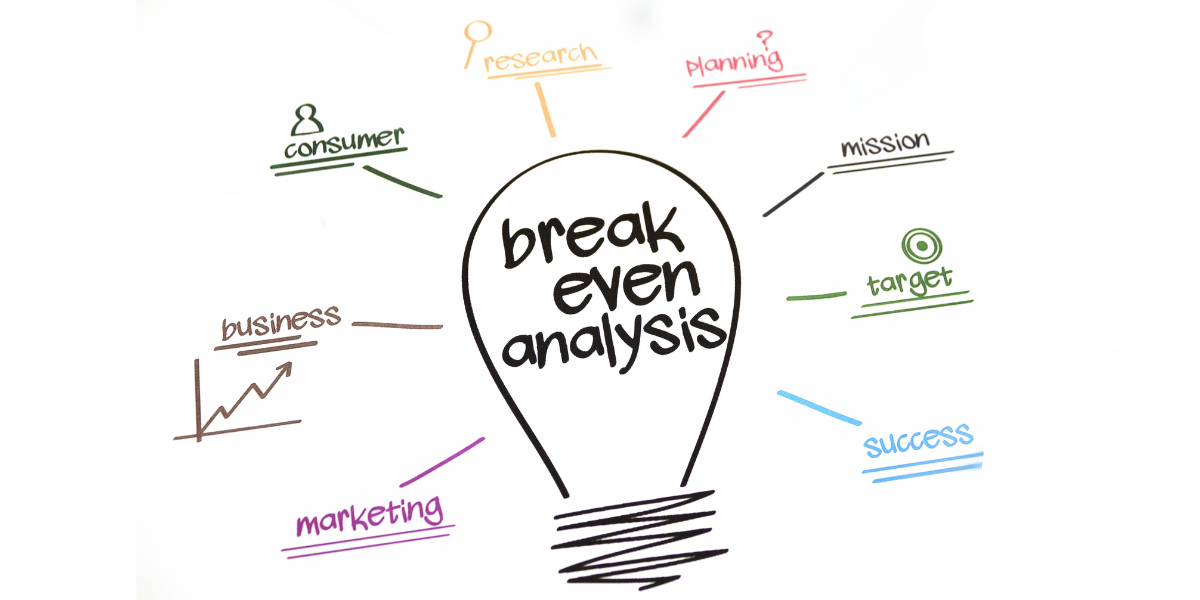
Evaluating Business Decisions using Breakeven Analysis
You shouldn’t rely on gut instinct when making major business decisions, such as launching a new product line, investing in new equipment or changing your pricing structure. Projecting the financial implications of your decision (or among competing alternatives) can help you determine the right course of action — and potentially persuade investors or lenders to finance your plans. One intuitive tool to consider for these applications is breakeven analysis.
What’s the breakeven point?
The breakeven point is simply the sales volume at which revenue equals total costs. Any additional sales above the breakeven point will result in a profit. To calculate your company’s breakeven point, first categorize all costs as either fixed (such as rent and administrative payroll) or variable (such as materials and direct labor).
Next, calculate the contribution margin per unit by subtracting variable costs per unit from the price per unit. Companies that sell multiple products or offer services typically estimate variable costs as a percentage of sales. For example, if a company’s variable costs run about 40% of annual revenue, its average contribution margin would be 60%.
Finally, add up fixed costs and divide by the unit (or percentage) contribution margin. In the previous example, if fixed costs were $600,000, the breakeven sales volume would be $1 million ($600,000 ÷ 60%). For each $1 in sales over $1 million, the hypothetical company would earn 60 cents.
When computing the breakeven point from an accounting standpoint, depreciation is normally included as a fixed expense, but taxes and interest usually are excluded. Fixed costs should also include all normal operating expenses (such as payroll and maintenance). The more items included in fixed costs, the more realistic the estimate will be.
How might you apply this metric?
To illustrate how breakeven analysis works: Suppose Joe owns a successful standalone coffee shop. He’s considering opening a second location in a nearby town. He’s familiar with the local market and the ins and outs of running a successful small retail business. But Joe likes to do his homework, so he collects the following cost data for opening a second location:
$10,000 of monthly fixed costs (including rent, utilities, insurance, advertising and the manager’s salary), and
$1.50 of variable costs per cup (including ingredients, paper products and barista wages).
If the new store plans to sell coffee for $4 per cup, what’s the monthly breakeven point? The estimated contribution margin would be $2.50 per cup ($4 − $1.50). So, the store’s monthly breakeven point would be 4,000 cups ($10,000 ÷ $2.50). Assuming an average of 30 days per month, the store would need to sell approximately 134 cups each day just to cover its operating costs. If Joe’s original store sells an average of 200 cups per day, this gives him a useful benchmark, though market dynamics may differ between locations. If Joe forecasts daily sales for the new store of 180 cups, it leaves a daily safety margin of 46 cups, which equates to roughly $115 in daily profits (46 × $2.50).
Joe can take this analysis further. For example, he knows there’s already another boutique coffee shop near the prospective location, so he’s considering lowering the price per cup to $3.75. Doing so would reduce his contribution margin to $2.25, causing his breakeven point to jump to 4,445 cups per month (about 148 cups per day). Assuming forecasted sales of 180 cups per day, the reduced price would lower the daily safety margin to 32 cups, which equates to about $72 in daily profits (32 × $2.25).
Joe might also consider other strategies to reduce his breakeven point and increase profits. For instance, he could negotiate with the landlord to reduce his monthly rent or find a supplier with less expensive cups and napkins. Joe could plug these changes into his breakeven model to see how sensitive profits are to cost changes.
If Joe opens the new store, he can monitor actual sales against his forecast to see if the store is on track. If not, he might need to consider changes, such as increasing the advertising budget or revising his prices. Then he can enter the revised inputs into his breakeven model. He could also revise his breakeven model based on actual costs incurred after the store opens.
We can help
Breakeven analysis is often more complex than this hypothetical example shows. However, it can be a valuable addition to your financial toolkit. Besides assisting with expansion planning, breakeven analysis can help you evaluate spending habits, set realistic sales goals and prices, and judge whether projected sales will sustain your business during an economic downturn. Contact FMD to learn how to analyze breakeven for your organization and leverage the data to make informed decisions about your business’s long-term financial stability.

FAQs About the Going Concern Assessment
The going concern assumption underlies financial reporting under U.S. Generally Accepted Accounting Principles (GAAP) unless management has plans to liquidate. If a going concern issue is identified but not adequately disclosed, the omission might be considered “pervasive” because it can affect users’ understanding of the financial statements as a whole. So it’s critical to get it right. Here are answers to common questions about this assumption to help evaluate your company’s ability to continue operating in the future.
Who’s responsible for the going concern assessment?
Management is responsible for making the going concern assessment and providing related footnote disclosures. Essentially, your management team must determine whether there are conditions or events — either from within the company or external factors — that raise substantial doubt about your company’s ability to continue as a going concern within 12 months after the date that the financial statements:
Will be issued, or
Will be available to be issued (to prevent auditors from holding financial statements for several months after year end to see if the company survives).
Then you must provide appropriate documentation to prove to external auditors that management’s assessment is reasonable and complete.
What are the signs of “substantial” doubt?
Substantial doubt exists when relevant conditions and events, considered in the aggregate, indicate that it’s probable that the company won’t be able to meet its current obligations as they become due. Examples of adverse conditions or events that might cause management to doubt the going concern assumption include:
Recurring operating losses,
Working capital deficiencies,
Loan defaults,
Asset disposals, and
Loss of a key person, franchise, customer or supplier.
If management identifies a going concern issue, they should consider whether any mitigating plans will alleviate the substantial doubt. Examples include plans to raise equity, borrow money, restructure debt, cut costs, or dispose of an asset or business line.
What role does your auditor play?
The Auditing Standards Board’s Statement on Auditing Standards (SAS) No. 132, The Auditor’s Consideration of an Entity’s Ability to Continue as a Going Concern, is intended to promote consistency between the auditing standards and accounting guidance under U.S. GAAP. The current auditing standard requires auditors to obtain sufficient audit evidence regarding management’s use of the going concern basis of accounting in the preparation of the financial statements. The standard also calls for auditors to conclude, based on their professional judgment, on the appropriateness of management’s assessment.
Audit procedure must evaluate whether management’s assessment:
Covers a period of at least 12 months after the financial statements are issued or available to be issued,
Is consistent with other information obtained during audit procedures, and
Considers relevant subsequent events that happen after the end of the accounting period.
During fieldwork, auditors assess management’s forecasts, assumptions and mitigation plans and arrive at an independent going concern assessment.
The evaluation of whether there’s substantial doubt about a company’s ability to continue as a going concern can be performed only on a complete set of financial statements at an enterprise level. So, the going concern auditing standard doesn’t apply to audits of single financial statements, such as balance sheets and specific elements, accounts or items of a financial statement.
How are going concern issues reported in audited financial statements?
The audit team also reviews the reasonableness of management’s disclosures. When a going concern issue exists and the disclosure is adequate, the auditor can issue an unmodified opinion. However, it will typically include an emphasis-of-matter paragraph that explains the nature of the going concern issue.
Conversely, if management fails to provide a going concern disclosure or the disclosure is inadequate or incomplete, the financial statements won’t conform with GAAP. As a result, the auditor will either issue 1) a qualified opinion if the issue is material but not pervasive, or 2) an adverse opinion if it’s both material and pervasive.
Sometimes, the scope of an audit may be limited if management won’t provide sufficient support for its going concern conclusion or the auditor can’t gather enough evidence independently. This situation, if pervasive, can lead to a disclaimer of opinion — a major red flag to lenders and investors.
Auditors as gatekeepers
By independently evaluating management’s assessment, testing assumptions and insisting on clear disclosures, auditors safeguard stakeholders from being misled when substantial doubt exists. As you prepare for your next audit, be sure to carefully document your going concern assessment, anticipate auditor scrutiny, and be ready to communicate candidly about risks and mitigation strategies. Contact FMD for guidance on navigating these complex requirements in today’s uncertain economic environment. Our team of experienced CPAs is here to help.

Receivables Rx: Key Metrics to Assess the Health of your Cash Flow
For many businesses, accounts receivable (AR) is one of the largest assets on the balance sheet. It represents the cash you’ve earned but haven’t yet collected. Efficient AR management is critical for maintaining healthy cash flow, reducing bad debt and fueling growth. But a key question often goes unasked: How do your company’s receivables compare to others in your industry? This is where benchmarking comes in.
Why benchmarking matters
Benchmarking is the process of comparing your company’s financial and operational metrics against those of peers in your industry. For receivables, benchmarking helps determine whether your collections practices, customer credit policies and cash management strategies align with competitors. The key is to use data from businesses that closely resemble your own in terms of size, customer base and industry segment.
Without context, an AR balance or ratio can be misleading. For example, collecting in 45 days might sound reasonable. However, if the industry average is 30 days, you’re financing your customers longer than your competitors are, potentially straining your liquidity. Benchmarking provides a reality check, highlighting areas where you may be lagging and where improvements could quickly boost cash flow.
3 diagnostic tools
There are three primary tools you can use to monitor how well your company manages receivables:
1. AR turnover ratio. This ratio is computed by dividing net credit sales by your average AR balance. The average balance equals the sum of your beginning and ending AR balances, divided by two. This ratio measures how many times, on average, receivables are collected during a period. A higher turnover suggests more efficient collections. When compared to industry data, it can reveal whether your business is converting receivables to cash as quickly as your peers.
2. DSO ratio. A more intuitive way to evaluate AR is to estimate the average days it takes to collect payment after a sale. The days’ sales outstanding (DSO) ratio equals the number of days in the period divided by the AR turnover ratio. For example, if your AR turns 10 times per year, your DSO ratio would be approximately 36.5 days (365 divided by 10). A lower DSO ratio generally means faster collections. If your DSO is higher than industry benchmarks, it could signal overly generous credit terms or collections inefficiencies.
3. AR aging report. This report categorizes receivables based on how long they’ve been outstanding. It breaks down the total balance into aging buckets, such as 0 to 30 days, 31 to 60 days, 61 to 90 days and over 90 days. Benchmarking your percentages in each bucket against industry norms helps identify whether overdue accounts are a common issue in your sector or a problem specific to your business’s collections practices.
The percentage of delinquent accounts (typically those over 90 days outstanding) is another critical number. You may decide to outsource these accounts to third-party collectors to eliminate the hassles of making collections calls and threatening legal actions to collect what you’re owed.
Fraud considerations
Although fraud in accounts receivable is uncommon relative to day-to-day operational challenges, when it does arise it most often involves lapping of customer payments, fictitious customer accounts, or the misclassification of personal expenses through the business. These schemes are not typically identified through standard AR benchmarking tools, but if irregularities are suspected, our forensic accounting team has the expertise and resources to conduct a thorough investigation and safeguard your organization.
Turning insights into action
Benchmarking isn’t just about spotting differences — it’s about acting on them. FMD can help evaluate your company’s AR management, including providing reliable industry-specific benchmarks, brainstorming practical strategies to shorten your collections cycle and investigating any suspicious trends. Contact us for more information.

Audit alert: Beware of Potential Conflicts of Interest
As year end approaches, many businesses will soon be preparing for their annual audits. One key consideration is ensuring there are no potential conflicts of interest that could compromise the integrity of your company’s financial statements. A conflict of interest can cloud an auditor’s judgment and undermine their objectivity. Vigilance in spotting these conflicts is essential to maintain the transparency and reliability of your financial reports.
Understanding conflicts of interest
According to the American Institute of Certified Public Accountants (AICPA), “A conflict of interest may occur if a member performs a professional service for a client and the member or his or her firm has a relationship with another person, entity, product or service that could, in the member’s professional judgment, be viewed by the client or other appropriate parties as impairing the member’s objectivity.” Companies should be on the lookout for potential conflicts when:
Hiring an external auditor,
Upgrading the level of assurance from a compilation or review to an audit, and
Using the auditor for non-audit purposes, such as investment advisory services and human resource consulting.
Determining whether a conflict of interest exists requires an analysis of facts. Some conflicts may be obvious, while others may require in-depth scrutiny.
For example, if an auditor recommends an external payroll provider’s software to an audit client and receives a commission from the provider, a conflict of interest likely exists. Why? While the third-party provider may suit the company’s needs, the payment of a commission raises concerns about the auditor’s motivation in making the recommendation. That’s why the AICPA prohibits an audit firm from accepting commissions from a third party when it involves a company the firm audits.
Now consider a situation in which a company approaches an audit firm to assist in a legal dispute with another company that’s an existing audit client. Here, given the inside knowledge the audit firm possesses of the company it audits, a conflict of interest likely exists. The audit firm can’t serve both parties to the lawsuit and comply with the AICPA’s ethical and professional standards.
Managing potential conflicts
AICPA standards require audit firms to avoid conflicts of interest. If a potential conflict is unearthed, audit firms have the following options:
Seek guidance from legal counsel or a professional body on the best path forward,
Disclose the conflict and secure consent from all parties to proceed,
Segregate responsibilities within the firm to avoid the potential for conflict, and/or
Decline or withdraw from the engagement that’s the source of the conflict.
Ask your auditors about the mechanisms the firm has implemented to identify and manage potential conflicts of interest before and during an engagement. For example, partners and staff members are usually required to complete annual compliance-related questionnaires and participate in education programs that cover conflicts of interest. Firms should monitor for conflicts regularly because circumstances may change over time, for example, due to employee turnover or M&A activity.
Safeguarding financial reporting
If left unchecked, conflicts of interest can compromise the credibility of your financial statements and expose your company to unnecessary risks. Our firm takes this issue seriously and adheres to rigorous ethical guidelines. If you suspect a conflict exists, contact FMD to discuss the matter before audit season starts and determine the most appropriate way to handle it.

How do Businesses Report Cloud Computing Implementation Costs?
Today, many organizations rely on cloud-based tools to store and manage data. However, the costs to set up cloud computing services can be significant, and many business owners are unsure whether the implementation costs must be immediately expensed or capitalized. Changes made in recent years provide some much-needed clarity to the rules.
Advantages of cloud storage
Before diving into the accounting rules, it’s important to understand the potential benefits of cloud-computing arrangements, including:
Cost savings. Cloud storage reduces the need for physical servers and IT infrastructure, lowering capital expenses.
Remote access. Cloud systems let your team access data and tools from anywhere. This can be ideal for hybrid or remote work models — or small business owners who frequently travel.
Scalability. As your business grows, cloud services can easily scale to match your data and software needs.
However, it’s critical to vet cloud-service providers carefully. Always choose a provider that offers strong security protocols and automated data backup. This reduces the risk of data loss from hardware failure or human error. As companies grow, they may decide to switch to cloud providers that offer enhanced security or more robust features.
Implementation costs
Whether your business is adopting cloud services for the first time or transitioning from one provider to another, setup costs can be significant. These often range from several thousand to tens of thousands of dollars. First-time implementation costs typically include:
Consulting and planning,
System configuration,
Data migration,
Integration with existing tools,
User training, and
Post-launch support.
Among the most labor-intensive, expensive parts of the process are migrating data securely and ensuring that cloud applications are tailored to your workflow. Additionally, time spent coordinating between your team, vendors and consultants can add up quickly.
Switching cloud providers can also be costly. You’ll likely need to repeat many of the same implementation steps. Plus, you might face other challenges, such as reformatting or cleaning data, re-establishing integrations, retraining employees and minimizing downtime. Some providers may charge exit fees or make data retrieval cumbersome. The more customized your current system is, the harder (and costlier) it may be to transfer your setup to a new platform.
Accounting rules
Previously, U.S. Generally Accepted Accounting Principles (GAAP) required companies to immediately expense all setup costs for cloud contracts that didn’t include a software license. This treatment impaired a company’s profits in the year it implemented a cloud-computing arrangement.
Fortunately, the Financial Accounting Standards Board updated the accounting rules in 2018. Now, businesses can capitalize and amortize certain implementation costs for service contracts that don’t include a software license. Specifically, costs related to the application development phase — such as configuration, coding and testing — can be capitalized and gradually expensed over the life of the contract. However, costs from the preliminary research phase or post-launch support still must be immediately expensed. Spreading out certain implementation costs over the contract’s life can improve financial ratios and reduce year-over-year volatility in reported profits.
The updated guidance went into effect in 2020 for calendar-year public companies and in 2021 for all other entities. However, you may not be aware of these changes if your company is adopting cloud services for the first time — or if you previously implemented a cloud arrangement under the old rules and are now switching providers.
For more information
The accounting rules for cloud computing arrangements can be complex, especially when determining which costs qualify and how to apply them across different contracts. Contact FMD for guidance on reporting these arrangements properly under current GAAP. We can help you review agreements, classify implementation costs, and choose a provider that offers both strong security and the functionality your business needs.

Budgeting Basics for Entrepreneurs
Starting a business can be rewarding, but the financial learning curve is often steep. The U.S. Bureau of Labor Statistics estimates that one in five new businesses will fail within one year of opening, roughly half will close within five years, and less than a third will survive for 10 years or longer. A common thread in early failures is weak financial planning and oversight.
A comprehensive, realistic budget can help your start-up minimize growing pains and thrive over the long run. However, accurate budgeting can be difficult when historical data is limited. Here are some tips to help jumpstart your start-up’s budgeting process:
Start at the top
First, forecast the top line of your company’s income statement — revenue. How much do you expect to sell over the next year? Monthly sales forecasts tend to become more reliable as the company builds momentum and management gains experience. But market research, industry benchmarks or small-scale test runs can help start-ups with limited history gauge future demand.
Next, evaluate whether you have the right mix of resources (such as people, equipment, tools, space and systems) to deliver forecasted revenue. If your current setup doesn’t support your goals, you may need to adjust your sales targets, pricing or operational capacity.
Get a handle on breakeven
Many costs — such as materials, labor, sales tax and shipping — vary based on revenue. Estimate how much you expect to earn on each $1 of revenue after subtracting direct costs. This is known as your contribution margin.
Some operating costs — such as rent, salaries and insurance — will be fixed, at least over the short run. Once you know your total monthly overhead costs, you can use your contribution margin to estimate how much you’ll need to sell each month to cover fixed costs. For instance, if your monthly fixed costs are $10,000 and your contribution margin is 40%, you’ll need to generate $25,000 in sales to break even.
However, don’t be discouraged if your small business isn’t profitable right away. Breaking even takes time and hard work. Once you do turn a profit, you’ll need to save room in your budget for income taxes.
Look beyond the income statement
Next, forecast your balance sheet at the end of each month. Start-ups use assets to generate revenue. For instance, you might need equipment and marketing materials (including a website). Some operating assets (like accounts receivable and inventory) typically move in tandem with revenue. Assets are listed on the balance sheet, typically in order of liquidity (how quickly the item can be converted into cash).
How will you finance your company’s assets? Entrepreneurs may invest personal funds, receive money from other investors or take out loans. These items fall under liabilities and equity on the balance sheet.
Monitor cash flows
Even profitable businesses can run into trouble if they fail to manage cash wisely. That’s why cash flow forecasting is essential. Consider these questions:
Will your business generate enough cash each month to cover fixed expenses, payroll, debt service and other short-term obligations?
Can you speed up collection or postpone certain payments?
Are you stockpiling excess inventory — or running too lean to meet demand?
Forecasting monthly cash flows helps identify when cash shortfalls, as well as seasonal peaks and troughs, are likely to occur. You should have a credit line or another backup plan in case you fall short.
Compare your results to the budget
Budgeting isn’t a static process. Each month, entrepreneurs should revisit their budgets and evaluate whether adjustments are needed based on actual results. For instance, you may have underbudgeted or overbudgeted on some items and, thus, spent more or less than you anticipated.
Some variances may be the result of macroeconomic forces. For example, increased government regulation, new competition or an economic downturn can adversely affect your budget. Although these items may be outside of your control, it’s critical to identify and address them early before variances spiral out of control.
Seek external guidance
Does your start-up struggle with budgeting? FMD can help you prepare a realistic budget based on past performance, industry benchmarks and evolving market trends. Contact us to help your small business build a better budget, evaluate variances and beat the odds in today’s competitive marketplace.