

BLOG

Using knowledge management to develop your succession plan
As the old saying goes, “Knowledge is power.” This certainly rings true in business, as those who best understand their industries and markets tend to have a knack for staying on top. If that person is a company’s owner, however, great knowledge can turn into a vulnerability when he or she decides to retire or otherwise leave the business.
As you develop your succession plan, consider how to mitigate the loss of pure know-how that will occur when you step down. One way to tackle this risk is to implement a knowledge management strategy.
Two types of knowledge
Knowledge management is a formal process of recognizing and treating knowledge as an asset that your company can identify, maintain and share. Generally, a business can subdivide knowledge into two types:
1. Explicit knowledge. This exists in the tangible world and typically includes company reports, financial statements and databases. These items are usually easy to access, extrapolate from and append. For your succession plan, however, you may need to dig deeper into your own confidential files, memos or emails.
2. Tacit knowledge. This is information that resides solely between the ears of a business’s leadership, employees and perhaps even service providers. As such, it’s not easily retrievable. In terms of succession planning, this may be the stuff that you haven’t written down or even talked about much.
Typical categories
Typical knowledge management categories include:
* Taxes and accounting,
* Financial management,
* Strategic planning,
* HR, payroll and employment practices,
* Sales and marketing,
* Customers,
* Production, and
* Technology.
In addition, knowledge management should account for your company’s intellectual property — trade secrets, for example. Many business owners keep such details close to their vests and even managers may not know the full value of the company’s intellectual property. This could put your business at risk following your departure.
A comprehensive knowledge management effort related to your succession plan will call on you to undertake a full inventory of every category listed above and perhaps others. Gathering your explicit knowledge may entail compiling years’, even decades’, worth of documents, files and writings. This may not be an easy task, but it’s still a matter of straight research.
You’ll likely find capturing your tacit knowledge somewhat more challenging. One idea is to ask a suitable employee or engage an outside consultant to interview you regarding all the pertinent categories. Many business owners find these conversations arduous at first but eventually enlightening and enjoyable.
A legacy preserved
A solid succession plan is imperative to maintaining the future stability and success of your company. Knowledge management can strengthen that plan and help preserve the legacy you’ve worked so hard to build. Contact us for further information and for help identifying knowledge related to your tax filings, accounting methods and other financial matters.
© 2019

Will leasing equipment or buying it be more tax efficient for your business?
Recent changes to federal tax law and accounting rules could affect whether you decide to lease or buy equipment or other fixed assets. Although there’s no universal “right” choice, many businesses that formerly leased assets are now deciding to buy them.
Pros and cons of leasing
From a cash flow perspective, leasing can be more attractive than buying. And leasing does provide some tax benefits: Lease payments generally are tax deductible as “ordinary and necessary” business expenses. (Annual deduction limits may apply.)
Leasing used to be advantageous from a financial reporting standpoint. But new accounting rules that bring leases to the lessee’s balance sheet go into effect in 2020 for calendar-year private companies. So, lease obligations will show up as liabilities, similar to purchased assets that are financed with traditional bank loans.
Leasing also has some potential drawbacks. Over the long run, leasing an asset may cost you more than buying it, and leasing doesn’t provide any buildup of equity. What’s more, you’re generally locked in for the entire lease term. So, you’re obligated to keep making lease payments even if you stop using the equipment. If the lease allows you to opt out before the term expires, you may have to pay an early-termination fee.
Pros and cons of buying
Historically, the primary advantage of buying over leasing has been that you’re free to use the assets as you see fit. But an advantage that has now come to the forefront is that Section 179 expensing and first-year bonus depreciation can provide big tax savings in the first year an asset is placed in service.
These two tax breaks were dramatically enhanced by the Tax Cuts and Jobs Act (TCJA) — enough so that you may be convinced to buy assets that your business might have leased in the past. Many businesses will be able to write off the full cost of most equipment in the year it’s purchased. Any remainder is eligible for regular depreciation deductions over IRS-prescribed schedules.
The primary downside of buying fixed assets is that you’re generally required to pay the full cost upfront or in installments, although the Sec. 179 and bonus depreciation tax benefits are still available for property that’s financed. If you finance a purchase through a bank, a down payment of at least 20% of the cost is usually required. This could tie up funds and affect your credit rating. If you decide to finance fixed asset purchases, be aware that the TCJA limits interest expense deductions (for businesses with more than $25 million in average annual gross receipts) to 30% of adjusted taxable income.
Decision time
When deciding whether to lease or buy a fixed asset, there are a multitude of factors to consider, including tax implications. We can help you determine the approach that best suits your circumstances.
© 2019

Are your employees ignoring their 401(k)s?
For many businesses, offering employees a 401(k) plan is no longer an option — it’s a competitive necessity. But employees often grow so accustomed to having a 401(k) that they don’t pay much attention to it.
It’s in your best interest as a business owner to buck this trend. Keeping your employees engaged with their 401(k)s will increase the likelihood that they’ll appreciate this benefit and get the most from it. In turn, they’ll value you more as an employer, which can pay dividends in productivity and retention.
Promote positive awareness
Throughout the year, remind employees that a 401(k) remains one of the most tax-efficient ways to save for retirement. Regardless of investment results, the pretax advantage and any employer match make a 401(k) plan an ideal way to save.
For example, point out that, for every $100 of pay they defer to the 401(k), the entire $100 is invested in the plan — not reduced for taxes as it would be if it were paid directly to them. And any employer match increases investment potential.
At the same time, make sure employees know that your 401(k) plan operates under federal regulations. Although the value of their accounts may go up and down, it isn’t affected by the performance of your business, because plan assets aren’t commingled with company funds.
Encourage patience, involvement
The fluctuations and complexities of the stock market may cause some participants to worry about their 401(k)s — or to try not to think about them. Regularly reinforce that their accounts are part of a long-term retirement savings and investment strategy. Explain that both the economy and stock market are cyclical. If employees are invested appropriately for their respective ages, their accounts will likely rebound from most losses.
If a change occurs in the investment environment, such as a sudden drop in the stock market, present it as an opportunity for them to reassess their investment strategy and asset allocation. Market shifts have a significant impact on many individuals’ asset allocations, resulting in portfolios that may be inappropriate for their ages, retirement horizons and risk tolerance. Suggest that employees conduct annual rebalancing to maintain appropriate investment risk.
Offer help
As part of their benefits package, some businesses provide financial counseling services to employees. If you’re one of them, now is a good time to remind them of this resource. Employee assistance programs sometimes offer financial counseling as well.
Another option is to occasionally engage investment advisors to come in and meet with your employees. Your plan vendor may offer this service. Of course, you should never directly give financial advice to employees through anyone who works for your company.
Advocate appreciation
A 401(k) plan is a substantial investment for any company in time, money and resources. Encourage employees to appreciate your efforts — for their benefit and yours. We can help you assess and express the financial advantages of your plan.
© 2019

Don’t let scope creep ruin your next IT project
Today’s business technology is both powerful and restive. No matter how “feature rich” a software solution or hardware asset may be, there’s always another upgrade around the corner. In other words, it’s just a matter of time before your company’s next IT project.
When that day arrives, watch out for “scope creep.” This term refers to the tendency of a project’s objective (or “scope”) to gradually expand while the job is underway. As a result, the schedule may drag and dollars may go to waste.
Common culprits
A variety of things can cause scope creep. In many cases, too few users give input during the planning stage. Or misunderstandings may occur between the project team and users, obscuring the purpose of the job.
Excessive implementation time undoes many projects as well. As weeks and months go by, business processes, policies and priorities tend to change. For a new system to meet the needs of the business, the project’s scope needs to be executable within a reasonable time frame.
Ineffective project management is another common culprit. Scope creep often arises when a project manager underestimates the complexity of the tasks at hand or fails to adequately motivate his or her team.
5 steps to success
To stop or at least minimize scope creep, follow these five steps:
1. Distinguish “must-haves” from “nice-to-haves.” Draw a red line between the functionalities your business absolutely must have and any added features that would be nice to have. Schedule the prioritized requirements in the form of phased deliverables during the project’s life cycle. Add “nice-to-haves” to the final phase or, better yet, defer them to future projects.
2. Put agreed-on deliverables in writing. Use a Statement of Work document to clearly outline the stated project requirements. Be sure to cover both those that are included and those that aren’t. Have everyone involved sign off on this document.
3. Divide and conquer. Segregate the project into small, manageable phases. As it proceeds, continue to review and sign off on each phase as it’s delivered, following an adequate testing period.
4. Introduce a formal change management process. If someone demands a change, ask him or her to rationalize the request in writing on a change order form. Then analyze the potential impact, estimate the added cost and time, and obtain consensus before proceeding. Adhering to this step typically eliminates many low-priority demands.
5. Anticipate some scope creep. It’s a rare project, if any, that proceeds exactly as planned. Allow for some scope creep in your budget and timeline.
Head-on approach
Improving your company’s technology should be cause for excitement and, eventually, celebration. Unfortunately, it too often brings anxiety and conflict. Tackling scope creep head on can help ensure that your IT projects go more smoothly. Our firm can help you assess the financial impact of any technology solution you’re considering and, if you decide to proceed, set a budget for the job.
© 2019

The home office deduction: Actual expenses vs. the simplified method
If you run your business from your home or perform certain functions at home that are related to your business, you might be able to claim a home office deduction against your business income on your 2018 income tax return. There are now two methods for claiming this deduction: the actual expenses method and the simplified method.
Basics of the deduction
In general, you’ll qualify for a home office deduction if part of your home is used “regularly and exclusively” as your principal place of business.
If your home isn’t your principal place of business, you may still be able to deduct home office expenses if 1) you physically meet with patients, clients or customers on your premises, or 2) you use a storage area in your home (or a separate free-standing structure, such as a garage) exclusively and regularly for your business.
Actual expenses
Traditionally, taxpayers have deducted actual expenses when they claim a home office deduction. Deductible home office expenses may include:
Direct expenses, such as the cost of painting and carpeting a room used exclusively for business,
A proportionate share of indirect expenses, such as mortgage interest, property taxes, utilities, repairs and insurance, and
A depreciation allowance.
But keeping track of actual expenses can be time consuming.
The simplified method
Fortunately, there’s a simplified method that’s been available since 2013: You can deduct $5 for each square foot of home office space, up to a maximum total of $1,500.
For example, if you’ve converted a 300-square-foot bedroom to an office you use exclusively and regularly for business, you can write off $1,500 under the simplified method (300 square feet x $5). However, if your business is located in a 600-square-foot finished basement, the deduction will still be only $1,500 because of the cap on the deduction under this method.
As you can see, the cap can make the simplified method less beneficial for larger home office spaces. But even for spaces of 300 square feet or less, taxpayers may qualify for a bigger deduction using the actual expense method. So, tracking your actual expenses can be worth the extra hassle.
Flexibility in filing
When claiming the home office deduction, you’re not locked into a particular method. For instance, you might choose the actual expense method on your 2018 return, use the simplified method when you file your 2019 return next year and then switch back to the actual expense method thereafter. The choice is yours.
Unsure whether you qualify for the home office deduction? Or wondering whether you should deduct actual expenses or use the simplified method? Contact us. We can help you determine what’s right for your specific situation.
© 2019

Best practices when filing a business interruption claim
Many companies, especially those that operate in areas prone to natural disasters, should consider business interruption insurance. Unlike a commercial property policy, which may cover certain repairs of damaged property, this coverage generally provides the cash flow to cover revenues lost and expenses incurred while normal operations are suspended because of an applicable event.
But be warned: Business interruption insurance is arguably among the most complicated types of coverage on the market today. Submitting a claim can be time-consuming and requires careful preparation. Here are some best practices to keep in mind:
Notify your insurer immediately. Contact your insurance rep by phone as soon as possible to describe the damage. If your policy has been water-damaged or destroyed, ask him or her to send you a copy.
Review your policy. Read your policy in its entirety to determine how to best present your claim. It’s important to understand the policy’s limits and deductibles before spending time documenting losses that may not be covered.
Practice careful recordkeeping. Maintain accurate records to support your claim. Reorganize your bookkeeping to segregate costs related to the business interruption and keep supporting invoices. Among the necessary documents are:
Predisaster financial statements and income tax returns,
Postdisaster business records,
Copies of current utility bills, employee wage and benefit statements, and other records showing continuing operating expenses,
Receipts for building materials, a portable generator and other supplies needed for immediate repairs,
Paid invoices from contractors, security personnel, media outlets and other service providers, and
Receipts for rental payments, if you move your business to a temporary location.
The calculation of losses is one of the most important, complex and potentially contentious issues involved in making a business interruption insurance claim. Depending on the scope of your loss, your insurer may enlist its own specialists to audit your claim. Contact us for help quantifying your business interruption losses and anticipating questions or challenges from your insurer. And if you haven’t yet purchased this type of coverage, we can help you assess whether it’s a worthy investment.
© 2019

Financial statements tell your business’s story, inside and out
Ask many entrepreneurs and small business owners to show you their financial statements and they’ll likely open a laptop and show you their bookkeeping software. Although tracking financial transactions is critical, spreadsheets aren’t financial statements.
In short, financial statements are detailed and carefully organized reports about the financial activities and overall position of a business. As any company evolves, it will likely encounter an increasing need to properly generate these reports to build credibility with outside parties, such as investors and lenders, and to make well-informed strategic decisions.
These are the typical components of financial statements:
Income statement. Also known as a profit and loss statement, the income statement shows revenues and expenses for a specified period. To help show which parts of the business are profitable (or not), it should carefully match revenues and expenses.
Balance sheet. This provides a snapshot of a company’s assets and liabilities. Assets are items of value, such as cash, accounts receivable, equipment and intellectual property. Liabilities are debts, such as accounts payable, payroll and lines of credit. The balance sheet also states the company’s net worth, which is calculated by subtracting total liabilities from total assets.
Cash flow statement. This shows how much cash a company generates for a particular period, which is a good indicator of how easily it can pay its bills. The statement details the net increase or decrease in cash as a result of operations, investment activities (such as property or equipment sales or purchases) and financing activities (such as taking out or repaying a loan).
Retained earnings/equity statement. Not always included, this statement shows how much a company’s net worth grew during a specified period. If the business is a corporation, the statement details what percentage of profits for that period the company distributed as dividends to its shareholders and what percentage it retained internally.
Notes to financial statements. Many if not most financial statements contain a supplementary report to provide additional details about the other sections. Some of these notes may take the form of disclosures that are required under Generally Accepted Accounting Principles — the most widely used set of accounting rules and standards. Others might include supporting calculations or written clarifications.
Financial statements tell the ongoing narrative of your company’s finances and profitability. Without them, you really can’t tell anyone — including yourself — precisely how well you’re doing. We can help you generate these reports to the highest standards and then use them to your best advantage.
© 2019
Refine your strategic plan with SWOT
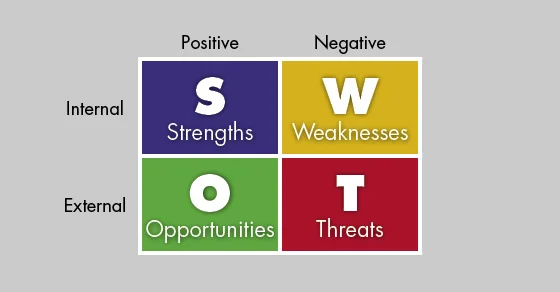
With the year underway, your business probably has a strategic plan in place for the months ahead. Or maybe you’ve created a general outline but haven’t quite put the finishing touches on it yet. In either case, there’s a time-tested approach to refining your strategic plan that you should consider: a SWOT analysis. Let’s take a closer look at what each of the letters in that abbreviation stands for:
Strengths. A SWOT analysis starts by identifying your company’s core competencies and competitive advantages. These are how you can boost revenues and build value. Examples may include an easily identifiable brand, a loyal customer base or exceptional customer service.
Unearth the source of each strength. A loyal customer base, for instance, may be tied to a star employee or executive — say a CEO with a high regional profile and multitude of community contacts. In such a case, it’s important to consider what you’d do if that person suddenly left the business.
Weaknesses. Next the analysis looks at the opposite of strengths: potential risks to profitability and long-term viability. These might include high employee turnover, weak internal controls, unreliable quality or a location that’s no longer advantageous.
You can evaluate weaknesses relative to your competitors as well. Let’s say metrics indicate customer recognition of your brand is increasing, but you’re still up against a name-brand competitor. Is that a battle you can win? Every business has its Achilles’ heel — some have several. Identify yours so you can correct them.
Opportunities. From here, a SWOT analysis looks externally at what’s happening in your industry, local economy or regulatory environment. Opportunities are favorable external conditions that could allow you to build your bottom line if your company acts on them before competitors do.
For example, imagine a transportation service that notices a growing demand for food deliveries in its operational area. The company could allocate vehicles and hire drivers to deliver food, thereby gaining an entirely new revenue stream.
Threats. The last step in the analysis is spotting unfavorable conditions that might prevent your business from achieving its goals. Threats might come from a decline in the economy, adverse technological changes, increased competition or tougher regulation.
Going back to our previous example, that transportation service would have to consider whether its technological infrastructure could support the rigorous demands of the app-based food-delivery industry. It would also need to assess the risk of regulatory challenges of engaging independent contractors to serve as drivers.
Typically presented as a matrix (see accompanying image), a SWOT analysis provides a logical framework for better understanding how your business runs and for improving (or formulating) a strategic plan for the year ahead. Our firm can help you gather and assess the financial data associated with the analysis.
© 2019

The New Revenue Recognition Standard: What You Need to Know
The Financial Accounting Standards Board (FASB) had been hard at work for years soliciting feedback related to revenue recognition. This process resulted in the issuance of Accounting Standards Update (ASU) No. 2014-09 “Revenue from Contracts with Customers".
The new standard is effective for privately-held companies beginning January 2019.
What this means is that all companies will need to re-evaluate their revenue recognition process to conform with the new standard. The new guidance sets out to “recognize revenue to depict the transfer of promised goods or services to customers in an amount that reflects the consideration to which the entity expects to be entitled in exchange for those goods or services.” In simpler terms, this is an attempt to create a “principles-based” framework to determine the timing and extent to which revenue is recognized.
The new ASU created a five-step framework to guide companies in making this determination:
Identify the contract with the customer.
Identify the performance obligations in the contract.
Determine the transaction price.
Allocate the transaction price to the performance obligations.
Recognize revenue when (or as) the entity satisfies a performance obligation.
With the implementation of this “principles-based” framework all former industry-specific guidance no longer applies. The AICPA has issued industry specific guidance under the new standard and will continue to do so to assist with implementation.
To comply with these new standards, a review of your contracts with customers is a must. There is a significant amount of judgement under the new standards. Consultation with your CPA regarding implementation is important as this new standard can impact bank covenants, financial ratios, etc. In addition to the initial evaluation of your contracts based on the above criteria, FMD recommends an ongoing periodic review of your contracts.
Additional Resource: Companies still find it difficult to comply with revenue recognition changes from Accounting Today

Is your business stuck in the mud with its marketing plan?
A good marketing plan should be like a network of well-paved, clearly marked roads shooting out into the world and leading back to your company. But, all too easily, a business can get stuck in the mud while trying to build these thoroughfares, leaving its marketing message ineffective and, well, muddled. Here are a few indications that you might be spinning your wheels.
Still the same
If you’ve been using the same marketing materials for years, it’s probably time for an update. Customers’ demographics, perspectives and expectations change over time. If your materials appear old and outdated, your products or services may seem that way too.
Check out the marketing and advertising of competitors, as well as perhaps a few companies that you admire. What about their efforts grabs you? Discuss it with your team and come up with a strategy for refreshing your look. You might need to do something as drastic as a total rebranding, or a few relatively minor tweaks might be sufficient.
Overreliance on one approach
While a marketing plan should take many avenues, sometimes when a business finds success via a certain route, it gets overly reliant on that one approach. Think of a company that has advertised in its local phonebook for years and doesn’t notice when a competitor starts pulling in customers via social media.
This is where data becomes key. Use metrics to track response rates to your various initiatives and regularly reassess the balance of your marketing approach. Unlike the business in our example, many companies today become too focused on social media and ignore other options. So, watch out for that.
Inconsistent message
Ask yourself whether your various marketing efforts complement — or conflict with — one another. For example, is it obvious that an online ad and a print brochure came from the same business? Are you communicating a consistent, easy-to-remember message to customers and prospects throughout your messaging?
In addition, be careful about tone and taking unnecessary risks — particularly when using social media. It’s a difficult challenge: You want to get noticed, and sometimes that means pushing the envelope, but you don’t want to end up being offensive. Generally, you shouldn’t run the risk of alienating customers with controversial material. If you do come up with an edgy idea that you believe will likely pay off, gather plenty of feedback from objective parties before launching.
Reconstruction work
A marketing plan going nowhere will likely leave your sales team lost and your bottom line suffering. Maybe it’s time to do some reconstruction work on yours. Contact us for more information and further suggestions.
© 2019

Getting wise to the rise of “smart” buildings
Nowadays, data drives everything — including the very buildings in which companies operate. If your business is considering upgrading its current facility, or moving to or constructing a new one, it’s important to be aware of “smart” buildings.
A smart building is one equipped with a variety of sensors that gather and track information about the structure’s energy usage and performance. With this data, the owners can better regulate the building’s energy consumption and, ultimately, save money.
Has this been the case in real life? The results of a 2018 Forbes Insights/Intel survey seem to indicate so. Of the 211 business leaders from around the world who responded, 66% answered affirmatively when asked whether smart building management technologies have produced a return on investment.
What’s out there
The name of the game with smart buildings is integration. Traditional building management and control systems don’t easily converge with today’s technology-driven and Internet-connected infrastructure. (This infrastructure is often referred to as “the Internet of Things.”) Sensor-collected data, however, flows directly to the management and control system of a building to automate everything from HVAC to lighting to security features.
Smart technology isn’t limited to new construction. When real estate developers renovate commercial space, it’s increasingly retrofitted with smart technology. By the same token, many large companies have renovated their own buildings to install data-gathering sensors. Doing so is an expensive undertaking but may be worthwhile if your business owns facilities in a prime location and doesn’t want to move.
At the same time, don’t assume every building will be completely automated. In the health care sector, for example, some facilities are finding that manual control of lighting and ventilation systems remains more effective because high traffic volume hampers computerized efforts to regulate energy usage.
Criteria to consider
The primary advantage of smart technology is simple. Over time, you should save money on energy costs by more accurately tracking and regulating usage — dollars that you can redirect toward more profitable activities. Any property you buy, however, must still fit a sensible budget and fulfill other functional criteria, such as being “right-sized” to your on-site workforce and perhaps coming with tax incentives.
When leasing, you’ll need to get specifics from the owner regarding the smart building in question. Was it built new with sensors or retrofitted? Are the sensors and data-processing equipment themselves up to date? You’ll also need to research local energy costs to ensure that the property owner is passing along the savings to you under a reasonable lease agreement.
Here to stay
Just as auto manufacturers no longer make cars without built-in computers, developers and contractors generally aren’t constructing buildings without smart technology. Bear this in mind as you shop for space. Whether you’re looking to lease, buy or build, we can help you weigh the pertinent factors and make the right decision.
© 2019

7 Tips to Reduce the Risk of Financial Loss in Your Business
In this day of electronic banking, the use of electronic payment methods has become an area easily abused by unscrupulous employees. However, many of the old “tried and true” prevention techniques still work. Stay diligent with your office oversight by implementing these tips in your business to reduce the chances of loss.
1. Make sure your bank requires two individuals to approve a bank payment (Check/ACH/Wire Transfer) - The Owner and/or a trusted family member that works in the business is preferred as the second approver.
2. Implement a Positive Pay system with your bank. Most banks today have systems where checks and other payments are pre-approved before they clear the bank so unknown items will not be processed when submitted for payment.
3. Open the mail (or the e-mail) from the bank, especially the monthly bank statements. Have the corporate bank statements mailed to your home, so your office knows that you will be the first one to open and review the monthly bank activity.
4. Segregate as many duties as possible within your office when it comes to access to cash. Employees with direct access to cash should not also have the ability to record accounting transactions.
5. Periodically review the payroll. Make sure there are no “phantom employees’ and that hourly rates and hours worked appear reasonable.
6. All employees with direct access to cash should be bonded.
7. Make sure your employee theft/embezzlement insurance coverage is sufficient. Premiums are relatively low for this type of coverage and can really pay large benefits if a loss is discovered.

4 business functions you could outsource right now
One thing in plentiful supply in today’s business world is help. Orbiting every industry are providers, consultancies and independent contractors offering a wide array of support services. Simply put, it’s never been easier to outsource certain business functions so you can better focus on fulfilling your company’s mission and growing its bottom line. Here are four such functions to consider:
1. Information technology. This is the most obvious and time-tested choice. Bringing in an outside firm or consultant to handle your IT systems can provide the benefits we’ve mentioned — particularly in the sense of enabling you to stay on task and not get diverted by technology’s constant changes. A competent provider will stay on top of the latest, optimal hardware and software for your business, as well as help you better access, store and protect your data.
2. Payroll and other HR functions. These areas are subject to many complex regulations and laws that change frequently — as does the software needed to track and respond to the revisions. A worthy vendor will be able to not only adjust to these changes, but also give you and your staff online access to payroll and HR data that allows employees to get immediate answers to their questions.
3. Customer service. This may seem an unlikely candidate because you might believe that, for someone to represent your company, he or she must work for it. But this isn’t necessarily so — internal customer service departments often have a high turnover rate, which drives up the costs of maintaining them and drives down customer satisfaction. Outsourcing to a provider with a more stable, loyal staff can make everyone happier.
4. Accounting. You could bring in an outside expert to handle your accounting and financial reporting. A reputable provider can manage your books, collect payments, pay invoices and keep your accounting technology up to date. The right provider can also help generate financial statements that will meet the desired standards of management, investors and lenders.
Naturally, there are potential downsides to outsourcing these or other functions. You’ll incur a substantial and regular cost in engaging a provider. It will be critical to get an acceptable return on that investment. You’ll also have to place considerable trust in any vendor — there’s always a chance that trust could be misplaced. Last, even a good outsourcing arrangement will entail some time and energy on your part to maintain the relationship.
Is this the year your business dips its toe in the vast waters of outsourced services? Maybe. Our firm can help you answer this question, choose the right function to outsource (if the answer is yes) and identify a provider likely to offer the best value.
© 2019

Economic damages: Recovering what was lost
A business can suffer economic damages arising from a variety of illegal conduct. Common examples include breach of contract, patent infringement and commercial negligence. If your company finds itself headed to court looking to recover lost profits, diminished business value or both, it’s important to know how the damages might be determined.
What methods are commonly used?
The goal of any economic damages case is to make your company, the plaintiff, “whole” again. In other words, one critical question must be answered: Where would your business be today “but for” the defendant’s alleged wrongdoing? When financial experts calculate economic damages, they generally rely on the following methods:
Before-and-after. Here, the expert assumes that, if it hadn’t been for the breach or other tortious act, the company’s operating trends would have continued in pace with past performance. In other words, damages equal the difference between expected and actual performance. A similar approach quantifies damages as the difference between the company’s value before and after the alleged “tort” (damaging incident) occurred.
Yardstick. Under this technique, the expert benchmarks a damaged company’s performance to external sources, such as publicly traded comparables or industry guidelines. The presumption is that the company’s performance would have mimicked that of its competitors if not for the tortious act.
Sales projection. Projections or forecasts of the company’s expected cash flow serve as the basis for damages under this method. Damages involving niche players and start-ups often call for the sales projection method, because they have limited operating history and few meaningful comparables.
An expert considers the specific circumstances of the case to determine the appropriate valuation method (or methods) for that situation.
What’s next?
After financial experts have estimated lost profits, they discount their estimates to present value. Some jurisdictions have prescribed discount rates, but, in many instances, experts subjectively determine the discount rate based on their professional opinions about risk. Small differences in the discount rate can generate large differences in final conclusions. As a result, the subjective discount rate is often a contentious issue.
The final step is to address mitigating factors. What could the damaged party have done to minimize its loss? Most jurisdictions hold plaintiffs at least partially responsible for mitigating their own damages. Like discount rates, this subjective adjustment often triggers widely divergent opinions among the parties involved.
Are you prepared?
You probably don’t relish the thought of heading to court to fight for economic damages. But these situations can occur — often quite unexpectedly — and it’s better to be prepared than surprised. Contact us for more information.
© 2019

Make sure the price is right with market research
The promise of the new year lies ahead. One way to help ensure it’s a profitable one is to re-evaluate your company’s pricing strategy. You need to devise an approach that considers more than just what it cost you to produce a product or deliver a service; it also must factor in what customers want and value — and how much money they’re willing to spend. Then you need to evaluate how competitors price and position their offerings.
Doing your homework
Optimal pricing decisions don’t occur in a vacuum; they require market research. Examples of economical ways smaller businesses can research their customers and competitors include:
Conducting informal focus groups with top customers,
Sending online surveys to prospective, existing and defecting customers,
Monitoring social media reviews, and
Sending free trials in exchange for customer feedback.
It’s also smart to investigate your competitors’ pricing strategies using ethical means. For example, the owner of a restaurant might eat a meal at each of her local competitors to evaluate the menu, decor and service. Or a manufacturer might visit competitors’ websites and purchase comparable products to evaluate quality, timeliness and customer service.
Charging a premium
Remember, low-cost pricing isn’t the only way to compete — in fact, it can be disastrous for small players in an industry dominated by large conglomerates. Your business can charge higher prices than competitors do if customers think your products and services offer enhanced value.
Suppose you survey customers and discover that they associate your brand with high quality and superior features. If your target market is more image conscious than budget conscious, you can set a premium price to differentiate your offerings. You’ll probably sell fewer units than your low-cost competitors but earn a higher margin on each unit sold. Premium prices also work for novel or exclusive products that are currently available from few competitors — or, if customers are drawn to the reputation, unique skills or charisma that specific owners or employees possess.
Going in low
Sometimes setting a low price, at least temporarily, does make sense. It can drive competitors out of the market and build your market share — or help you survive adverse market conditions. Being a low-cost leader enables your business to capture market share and possibly lower costs through economies of scale. But you’ll earn a lower margin on each unit sold.
Another approach is to discount some loss leader products to draw in buyers and establish brand loyalty in the hope that customers will subsequently buy complementary products and services at higher margins. You also may decide to offer discounts when seasonal demand is low or when you want to get rid of less popular models to lower inventory carrying costs.
Evolving over time
Do your prices really reflect customer demand and market conditions? Pricing shouldn’t be static — it should evolve with your business and its industry. Whether you’re pricing a new product or service for the first time or reviewing your existing pricing strategy, we can help you analyze the pertinent factors and make an optimal decision.
© 2018

Do your long-term customers know everything about you?
A technician at a mobility equipment supplier was servicing the motorized wheelchair of a long-time customer and noticed it was a brand-new model. “Where did you buy the chair?” he asked the customer. “At the health care supply store on the other side of town,” the customer replied. The technician paused and then asked, “Well, why didn’t you buy the chair from us?” The customer replied, “I didn’t know you sold wheelchairs.”
Look deeper
Most business owners would likely agree that selling to existing customers is much easier than finding new ones. Yet many companies continue to squander potential sales to long-term, satisfied customers simply because they don’t create awareness of all their products and services.
It seems puzzling that the long-time customer in our example wouldn’t know that his wheelchair service provider also sold wheelchairs. But when you look a little deeper, it’s easy to understand why.
The repair customer always visited the repair shop, which had a separate entrance. While the customer’s chair was being repaired, he sat in the waiting area, which provided a variety of magazines but no product brochures or other promotional materials. The customer had no idea that a new sales facility was on the other side of the building until the technician asked about the new wheelchair.
Be inquisitive
Are you losing business from long-term customers because of a similar disconnect? To find out, ask yourself two fundamental questions:
1. Are your customers buying everything they need from you? To find the answer, you must thoroughly understand your customers’ needs. Identify your top tier of customers — say, the 20% who provide 80% of your revenue. What do they buy from you? What else might they need? Don’t just take orders from them; learn everything you can about their missions, strategic plans and operations.
2. Are your customers aware of everything you offer? The quickest way to learn this is, simply, to ask. Instruct your salespeople to regularly inquire about whether customers would be interested in products or services they’ve never bought. Also, add flyers, brochures or catalogs to orders when you fulfill them. Consider building greater awareness by hosting free lunches or festive corporate events to educate your customers on the existence and value of your products and services.
Raise awareness
If you have long-term customers, you must be doing something right — and that’s to your company’s credit. But, remember, it’s not out of the question that you could lose any one of those customers if they’re unaware of your full spectrum of products and services. That’s an open opportunity for a competitor.
By taking steps to raise awareness of your products and services, you’ll put yourself in a better position to increase sales and profitability. Our firm can help you identify your strongest revenue sources and provide further ideas for enhancing them.
© 2018

Getting ahead of the curve on emerging technologies
Turn on your computer or mobile device, scroll through Facebook or Twitter, or skim a business-oriented website, and you’ll likely come across the term “emerging technologies.” It has become so ubiquitous that you might be tempted to ignore it and move on to something else. That would be a mistake.
In today’s competitive business landscape, your ability to stay up to date — or, better yet, get ahead of the curve — on the emerging technologies in your industry could make or break your company.
Watch the competition
There’s a good chance that some of your competitors already are trying to adapt emerging technologies such as these:
Machine learning. A form of artificial intelligence, machine learning refers to the ability of machines to learn and improve at a specific task with little or no programming or human intervention. For instance, you could use machine learning to search through large amounts of consumer data and make predictions about future purchase patterns. Think of Amazon’s suggested products or Netflix’s recommended viewing.
Natural language processing (NLP). This technology employs algorithms to analyze unstructured human language in emails, texts, documents, conversation or otherwise. It could be used to find specific information in a document based on the other words around that information.
Internet of Things (IoT). The IoT is the networking of objects (for example, vehicles, building systems and household appliances) embedded with electronics, software, sensors and Internet connectivity. It allows the collection, sending and receiving of data about users and their interactions with their environments.
Robotic process automation (RPA). You can use RPA to automate repetitive manual tasks that eat up a lot of staff time but don’t require decision making. Relying on business rules and structured inputs, RPA can perform such tasks with greater speed and accuracy than any human possibly could.
Not so difficult
If you fall behind on these or other emerging technologies that your competitors may already be incorporating, you run the risk of never catching up. But how can you stay informed and know when to begin seriously pursuing an emerging technology? It’s not as difficult as you might think:
Schedule time to study emerging technologies, just as you would schedule time for doing market research or attending an industry convention.
Join relevant online communities. Follow and try to connect with the thought leaders in your industry, whether authors and writers, successful CEOs, bloggers or otherwise.
Check industry-focused publications and websites regularly.
Taking the time for these steps will reduce the odds that you’ll be caught by surprise and unable to catch up or break ahead.
When you’re ready to undertake the process of integrating an emerging technology into your business operation, forecasting both the implementation and maintenance costs will be critical. We can help you create a reasonable budget and manage the financial impact.
© 2018

Can a PTO contribution arrangement help your employees and your business?
As the year winds to a close, most businesses see employees taking a lot of vacation time. After all, it’s the holiday season, and workers want to enjoy it. Some businesses, however, find themselves particularly short-staffed in December because they don’t allow unused paid time off (PTO) to be rolled over to the new year, or they allow only very limited rollovers.
There are good business reasons to limit PTO rollovers. Fortunately, there’s a way to reduce the year-end PTO vortex without having to allow unlimited rollovers: a PTO contribution arrangement.
Retirement saving with a twist
A PTO contribution arrangement allows employees with unused vacation hours to elect to convert them to retirement plan contributions. If the plan has a 401(k) feature, it can treat these amounts as a pretax benefit, similar to normal employee deferrals. Alternatively, the plan can treat the amounts as employer profit sharing, converting excess PTO amounts to employer contributions.
This can be appealing to any employees who end up with a lot of PTO left at the end of the year and don’t want to lose it. But it can be especially valued by employees who are concerned about their level of retirement saving or who simply value money more than time off of work.
Good for the business
Of course the biggest benefit to your business may simply be that it’s easier to ensure you have sufficient staffing at the end of the year. But you could reap that same benefit by allowing PTO rollovers (or, if you allow some rollover, increasing the rollover limit).
A PTO contribution arrangement can be a better option than increasing the number of days employees can roll over. Why? Larger rollover limits can result in employees building up large balances that create a significant liability on your books.
Also, a PTO contribution arrangement might help you improve recruiting and retention, because of its appeal to employees who want to save more for retirement or don’t care about having a lot of PTO.
Set-up is simple
To offer a PTO contribution arrangement, simply amend your retirement plan. However, you must still follow the plan document’s eligibility, vesting, rollover, distribution and loan terms. Additional rules apply.
Have questions about PTO contribution arrangements? Contact us. We can help you assess whether such an arrangement would make sense for your business.
© 2018

Family businesses need succession plans, too
Those who run family-owned businesses often underestimate the need for a succession plan. After all, they say, we’re a family business — there will always be a family member here to keep the company going and no one will stand in the way.
Not necessarily. In one all-too-common scenario, two of the owner’s children inherit the business and, while one wants to keep the business in the family, the other is eager to sell. Such conflicts can erupt into open combat between heirs and even destroy the company. So, it’s important for you, as a family business owner, to create a formal succession plan — and to communicate it well before it’s needed.
Talk it out
A good succession plan addresses the death, incapacity or retirement of an owner. It answers questions now about future ownership and any potential sale so that successors don’t have to scramble during what can be an emotionally traumatic time.
The key to making any plan work is to clearly communicate it with all stakeholders. Allow your children to voice their intentions. If there’s an obvious difference between siblings, resolving that conflict needs to be central to your succession plan.
Balancing interests
Perhaps the simplest option, if you have sufficient assets outside your business, is to leave your business only to those heirs who want to be actively involved in running it. You can leave assets such as investment securities, real estate or insurance policies to your other heirs.
Another option is for the heirs who’d like to run the business to buy out the other heirs. But they’ll need capital to do that. You might buy an insurance policy with proceeds that will be paid to the successor on your death. Or, as you near retirement, it may be possible to arrange buyout financing with your company’s current lenders.
If those solutions aren’t viable, hammer out a temporary compromise between your heirs. In a scenario where they are split about selling, the heirs who want to sell might compromise by agreeing to hold off for a specified period. That would give the other heirs time to amass capital to buy their relatives out or find a new co-owner, such as a private equity investor.
Family comes first
For a family-owned business, family should indeed come first. To ensure that your children or other relatives won’t squabble over the company after your death, make a succession plan that will accommodate all your heirs’ wishes. We can provide assistance, including helping you divide your assets fairly and anticipating the applicable income tax and estate tax issues.
© 2018

Devote some time to internal leadership development
Many factors go into the success of a company. You’ve got to offer high-quality products or services, provide outstanding customer service, and manage your inventory or supply chain. But there’s at least one other success factor that many business owners often overlook: internal leadership training and development.
Even if all your executive and management positions are filled with seasoned leaders right now, there’s still a major benefit to continually training, coaching and mentoring employees for leadership responsibilities. After all, even someone who doesn’t work in management can champion a given initiative or project that brings in revenue or elevates the company’s public image.
Ideas to consider
Internal leadership development is practiced when owners and executives devote time to helping current managers as well as employees who might one day be promoted to positions of leadership.
To do this, shift your mindset from being only “the boss” to being someone who holds an important responsibility to share leadership knowledge with others. Here are a few tips to consider:
Contribute to performance development. Most employees’ performance reviews will reveal both strengths and weaknesses. Sit down with current and potential leaders and generously share your knowledge and experience to bolster strong points and shore up shortcomings.
Invite current and potential leaders to meetings. Give them the opportunity to participate in important meetings they might not otherwise attend, and solicit their input during these gatherings. This includes both internal meetings and interactions with external vendors, customers and prospects. Again, look to reinforce positive behaviors and offer guidance on areas of growth.
Introduce them to the wider community. Get current and potential leaders involved with an industry trade association or a local chamber of commerce. By meeting and networking with others in your industry, these individuals can get a broader perspective on the challenges that your company faces — as well as its opportunities.
Give them real decision-making authority. Probably not right away but, at some point, put a new leader to the test. Give them control of a project and then step back and observe the results. Don’t be afraid to let them fail if their decisions don’t pan out. This can help your most promising employees learn real-world lessons now that can prove invaluable in the future.
Benefits beyond
Dedicating some time and energy to internal leadership development can pay off in ways beyond having well-trained managers. You’ll likely boost retention by strengthening relationships with your best employees. Furthermore, you may discover potential problems and avail yourself of new ideas that, otherwise, may have never reached you. Our firm can provide further information and other ideas.
© 2018